
MRI for Metal Workers: Hazards and Solutions
Welders, machinists, and metal workers face unique MRI risks from embedded metal fragments. Learn how Precise Imaging screens for hazards and offers safe options.
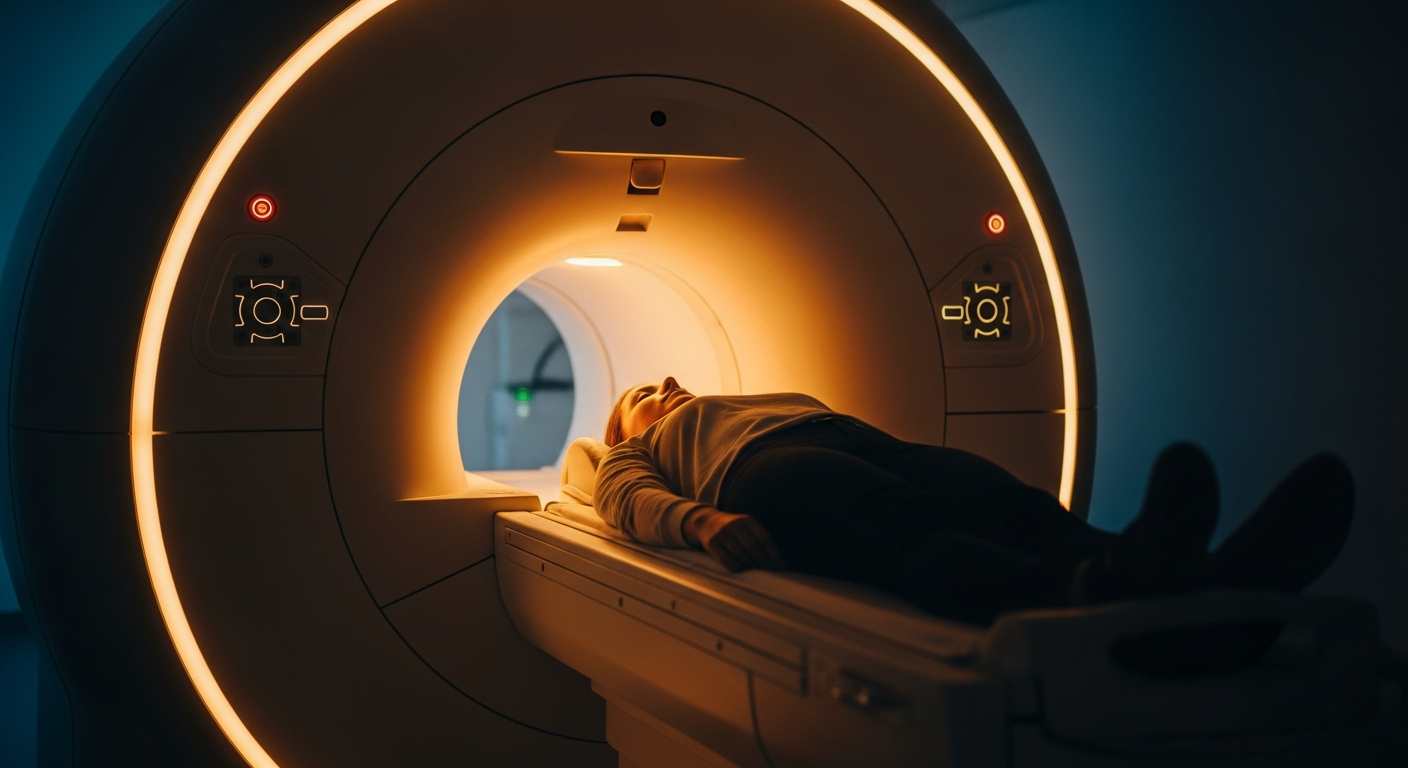
If you’ve spent years welding, grinding, machining, or working in a metal fabrication shop, an MRI scan deserves a little extra preparation. The same magnetic field that produces detailed, radiation-free images of soft tissue can also interact with tiny pieces of ferromagnetic metal that may be embedded in the body after a career around hot sparks, shavings, and grinding wheels. The good news: with the right pre-scan screening, the vast majority of metal workers can still get a high-quality MRI safely, and there are well-established backup plans when they can’t.
This guide explains the specific hazards metal workers should know about, the questions a Precise Imaging technologist will ask before a scan, and the practical solutions we use to keep every patient safe.
Why MRI Is Different for Metal Workers
An MRI scanner produces a static magnetic field that is roughly 30,000 to 60,000 times stronger than Earth’s magnetic field. It also pulses radiofrequency energy and switching gradients during the scan. For most patients, this is entirely safe — MRI uses no ionizing radiation at all. The concern for metal workers is mechanical and thermal, not radiologic:
- Movement of embedded metal. A small ferromagnetic fragment lodged in soft tissue can be tugged or rotated by the magnetic field. In sensitive locations — especially the eye — even a fragment less than a millimeter across can cause serious injury.
- Heating of conductive metal. Larger metal pieces or implanted hardware can absorb radiofrequency energy and warm up. With the right screening and scan parameters, this risk is managed; without screening, it can lead to burns.
- Image distortion. Even when metal is not dangerous, it can create artifacts that obscure the very tissue your doctor is trying to see, reducing the diagnostic value of the scan.
These three issues are the reason the screening process for someone who has worked with metal looks a little different from a typical pre-MRI questionnaire.
The Specific Hazards to Know About
1. Intraocular Metal Foreign Bodies
This is the single most important risk to rule out. A microscopic piece of steel that flew into the eye during grinding or welding — even decades ago, and even if it was never symptomatic — can move during an MRI and damage the retina or other delicate structures. Workers who have ever had a metal fragment in or near an eye, or who suspect they might have, need imaging clearance before MRI.
2. Skin and Subcutaneous Fragments
Old slivers, embedded shrapnel from grinding, or shop accidents that were never fully cleaned out can sit just under the skin for years. Most of these are too small to move dangerously, but they can heat up or distort the image. Telling your technologist about any “bumps” you remember from past injuries helps them plan the scan.
3. Tattoos with Metallic Pigments
Some older tattoo inks — and some industrial-style pigments — contain iron-oxide compounds. These can occasionally feel warm during an MRI. Modern scanners and shorter sequences have made this very rare, but it’s worth mentioning a large or dark tattoo before you’re positioned in the scanner.
4. Surgical Hardware from Workplace Injuries
Plates, pins, screws, and rods placed after a job-site fracture are almost always MR Conditional today, meaning they can be scanned safely under defined conditions. The technologist needs the type and, when possible, the date of the hardware to confirm the conditions are met.
5. Implanted Medical Devices
Pacemakers, defibrillators, neurostimulators, cochlear implants, and certain drug pumps all require careful evaluation. Many newer devices are MR Conditional; older ones may not be. Bring the device card if you have one — it lists the model number the radiology team needs.
How Precise Imaging Screens for These Hazards
Every patient at a Precise Imaging center completes a detailed safety screening before stepping into the MRI suite. For patients with a history of metal work, the screening is more thorough:
- Occupational history questions. The intake form asks specifically about welding, grinding, machining, and other metalworking trades — not just whether you currently have metal on you. Be honest, even about jobs from years or decades ago.
- Targeted injury history. The technologist will ask about any metal fragment ever entering an eye or being removed from skin, and about any workplace surgeries.
- Orbital X-ray when indicated. If there is any reasonable suspicion of an intraocular metal foreign body, we will obtain plain X-rays of the orbits before MRI. The orbital X-ray is fast, low-dose, and definitively rules out a dangerous fragment near the eye.
- Device documentation review. For patients with implanted hardware or devices, we confirm the make and model against the manufacturer’s MR safety guidance and the scanner’s specifications.
- Final time-out at the scanner. Just before the scan begins, the technologist confirms one more time that no loose metal — keys, badges, magnetic ID cards, hair clips, work boots with steel toes — has come into the room.
This layered approach is why MRI accidents involving metal workers are exceptionally rare in modern outpatient imaging.
Solutions When a Standard MRI Isn’t Safe
If screening turns up a true contraindication, that doesn’t mean you can’t get the answers your doctor needs. Several alternatives are available, and the radiology team will help your referring physician choose the best one.
- Orbital clearance first, MRI second. When orbital X-ray rules out an intraocular fragment, the MRI proceeds as planned. This is by far the most common path.
- CT (computed tomography). For many of the same questions an MRI would answer — fractures, certain tumors, joint problems — a CT scan gives excellent detail and is unaffected by metal. CT does use ionizing radiation, so it’s reserved for situations where it’s the right tool.
- Ultrasound. For soft-tissue questions, especially in tendons, muscles, and superficial structures, diagnostic ultrasound is fast, comfortable, and metal-safe.
- X-ray. For bone, fracture, and hardware questions, plain X-ray remains the workhorse and is always safe around embedded metal.
- Modified MRI protocol. When the metal is small, well-characterized, and known to be MR Conditional, the radiologist can adjust the scan parameters — lower specific absorption rate, metal-artifact-reduction sequences — to image safely around the hardware.
What to Tell Us Before Your Appointment
To make your visit smooth, gather the following before you arrive:
- The trades you’ve worked in (welder, machinist, sheet-metal worker, auto-body technician, foundry worker, etc.) and roughly how many years.
- Any history of a metal fragment in an eye, face, or hand — even if it was “taken care of” at the time.
- A list of any orthopedic hardware (plates, pins, rods, screws) and, if you have them, the operative reports or implant cards.
- A list of any electronic implants and their device cards.
- Information about any large tattoos, especially older ones.
We Image Metal Workers Every Day
Precise Imaging connects patients with owned and participating outpatient imaging centers in California. If you have questions about your specific situation before scheduling, our team is happy to walk through your history on the phone and coordinate any pre-MRI clearance with your referring physician.
Your job built and maintains the world around us. When you need imaging, we’ll make sure it’s done safely — and that you get the answers your doctor needs.