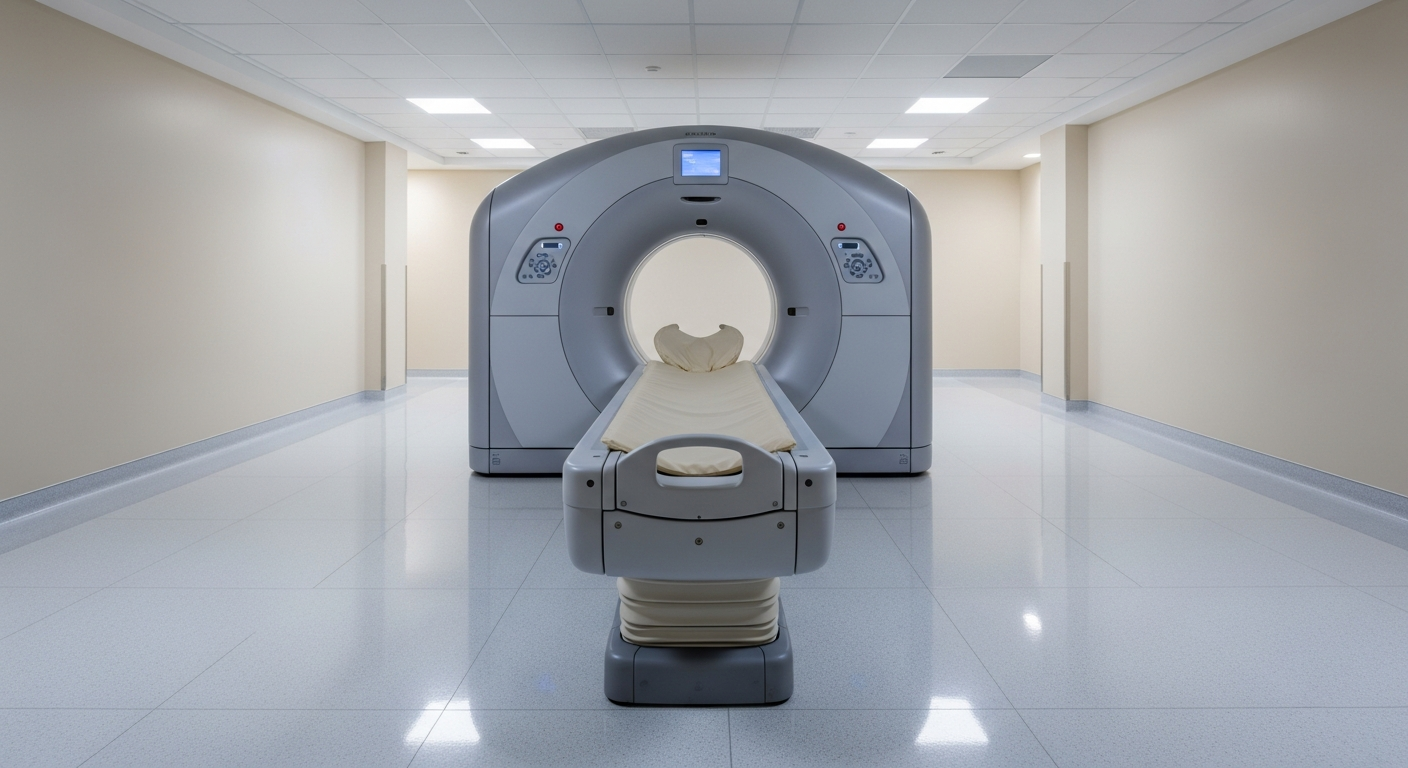
3T vs 1.5T MRI — Does the Higher Field Strength Matter?
Compare 3T and 1.5T MRI systems — image detail, scan time, safety with implants, and the studies that genuinely benefit from a higher-field magnet.
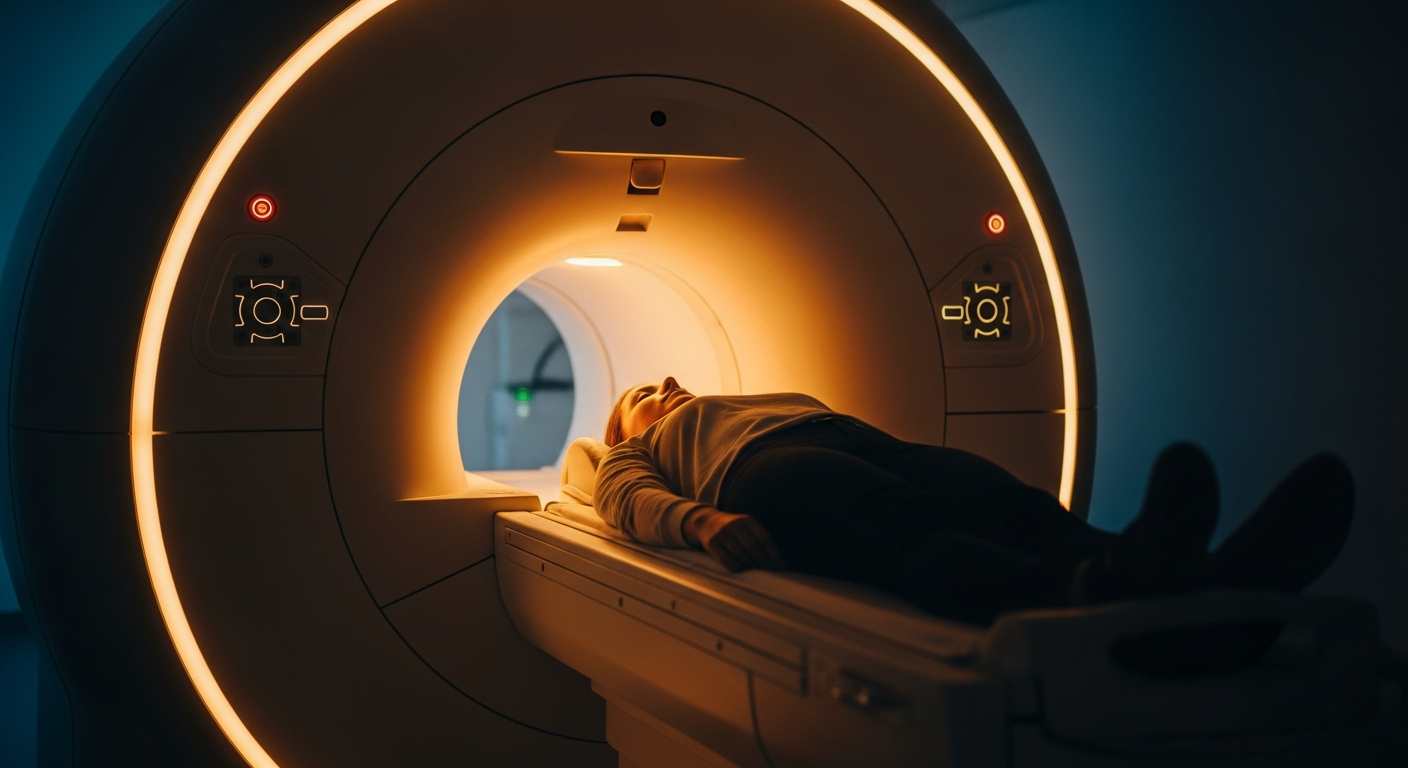
Both 1.5T and 3T MRI scanners are diagnostic-quality, and Precise operates both across our California network. The number ("T", for Tesla) refers to the strength of the magnet. Doubling the field strength changes a few things — but not everything.
TL;DR comparison
| Feature | 1.5T MRI | 3T MRI |
|---|---|---|
| Magnet strength | 1.5 Tesla | 3.0 Tesla |
| Signal-to-noise ratio | Baseline | Roughly 2× higher |
| Image detail | Excellent for most studies | Sharper, finer-resolution images |
| Typical scan time | Baseline | Often shorter for the same protocol |
| Best for | General MSK, abdominal, routine brain & spine | Small structures, neuro, prostate, breast, research-grade detail |
| Implant safety | Most MR-conditional implants approved | Some implants only conditional at 1.5T — must verify |
| Susceptibility artifacts | Less prominent | More prominent near metal and air-tissue interfaces |
| Available at Precise | Yes — most locations | Yes — select locations |
How field strength changes the image
The MRI signal scales with magnetic field strength. A 3T system delivers roughly twice the signal-to-noise ratio (SNR) of a 1.5T system, which the radiologist can use one of two ways:
- Higher resolution — thinner slices, smaller voxels, more anatomic detail in the same scan time.
- Faster scans — equivalent image quality completed in less time.
Most 3T protocols split the difference, giving moderately sharper images in a moderately shorter session.
When 3T is preferred
- Brain and cranial nerve imaging where small lesions matter (epilepsy, MS, pituitary)
- Multi-parametric prostate MRI (PI-RADS reads benefit from 3T detail)
- Breast MRI with dynamic contrast enhancement
- Small-joint MSK (wrist, ankle ligaments, TFCC)
- Cardiac MRI for tissue characterization
- Functional MRI (fMRI) and MR spectroscopy
When 1.5T is the right choice
- Patients with implants that are conditional at 1.5T only
- Larger-bore needs for body habitus or claustrophobia
- Routine spine, knee, shoulder, and abdominal MRI
- Patients with metallic hardware where 3T susceptibility artifacts would obscure the read
- Pregnancy (some protocols default to 1.5T as a precaution)
Safety, speed, and cost differences
Safety. Both field strengths are safe for cleared patients. The risk is not the magnet itself but undeclared metal in your body. Our technologists screen every patient before the scan, and we'll confirm any implant's specific Tesla rating against the manufacturer's label. Some pacemakers, neurostimulators, and cochlear implants are MR-conditional at 1.5T but not at 3T.
Speed. 3T can shave several minutes off a typical exam when protocols are tuned for it. The difference is meaningful in claustrophobic patients or long studies.
Artifacts. 3T is more prone to susceptibility artifact (signal distortion) near dental work, surgical hardware, or air-tissue interfaces. For patients with prominent hardware, 1.5T can produce a cleaner read.
Cost. Insurance reimbursement is generally similar between the two. Self-pay rates are comparable at Precise — we don't upcharge for 3T.
Contrast. Gadolinium dosing is the same protocol at either field strength.
How to decide with your doctor
Most referrals don't specify the field strength — the radiologist and the imaging center pick the best fit. Things that change the choice:
- The body part and clinical question. Neuro, prostate, breast, and small-joint reads often benefit from 3T. General MSK and abdominal studies do well at 1.5T.
- Implants. Bring the implant card or manufacturer info — we'll match to the right magnet.
- Prior imaging. Following the same patient on the same field strength makes side-by-side comparison easier.
- Claustrophobia. Both are available in wide-bore designs at Precise. If you prefer an Open MRI, see our Open vs Closed MRI comparison.
To find a location with 3T availability, see MRI services and locations or call 800-558-2223. For prep instructions, see Preparing for Your High-Field 3T MRI Scan.
Frequently asked questions
Is 3T MRI always better than 1.5T?+
No — 3T offers higher signal-to-noise and better detail for many studies, but 1.5T is often preferable when certain implants are conditional only at 1.5T, when susceptibility artifacts from hardware would obscure the image at 3T, or when wider-bore comfort matters.
Are 3T MRIs safe for everyone?+
3T is safe for cleared patients, but some implants (pacemakers, neurostimulators, certain aneurysm clips, some cochlear implants) are MR-conditional at 1.5T only. Bring your implant card or manufacturer information — our technologists will match you to the right system.
Does a 3T MRI take less time?+
Often yes — protocols can be tuned to shorten scan time at 3T while maintaining image quality. Differences are usually a handful of minutes, which matters most in long studies or for claustrophobic patients.
Does insurance cover 3T MRI?+
Yes. Insurance generally reimburses MRI based on the body part and protocol, not the field strength. Self-pay rates at Precise are comparable between 1.5T and 3T — we don't upcharge for 3T.
Which is better for back or knee MRI?+
Either field strength is excellent for routine spine and knee imaging. 3T offers a small detail advantage for fine cartilage and small ligament evaluation; 1.5T is fully diagnostic for the vast majority of cases. Your radiologist will pick based on the clinical question and your prior imaging.