
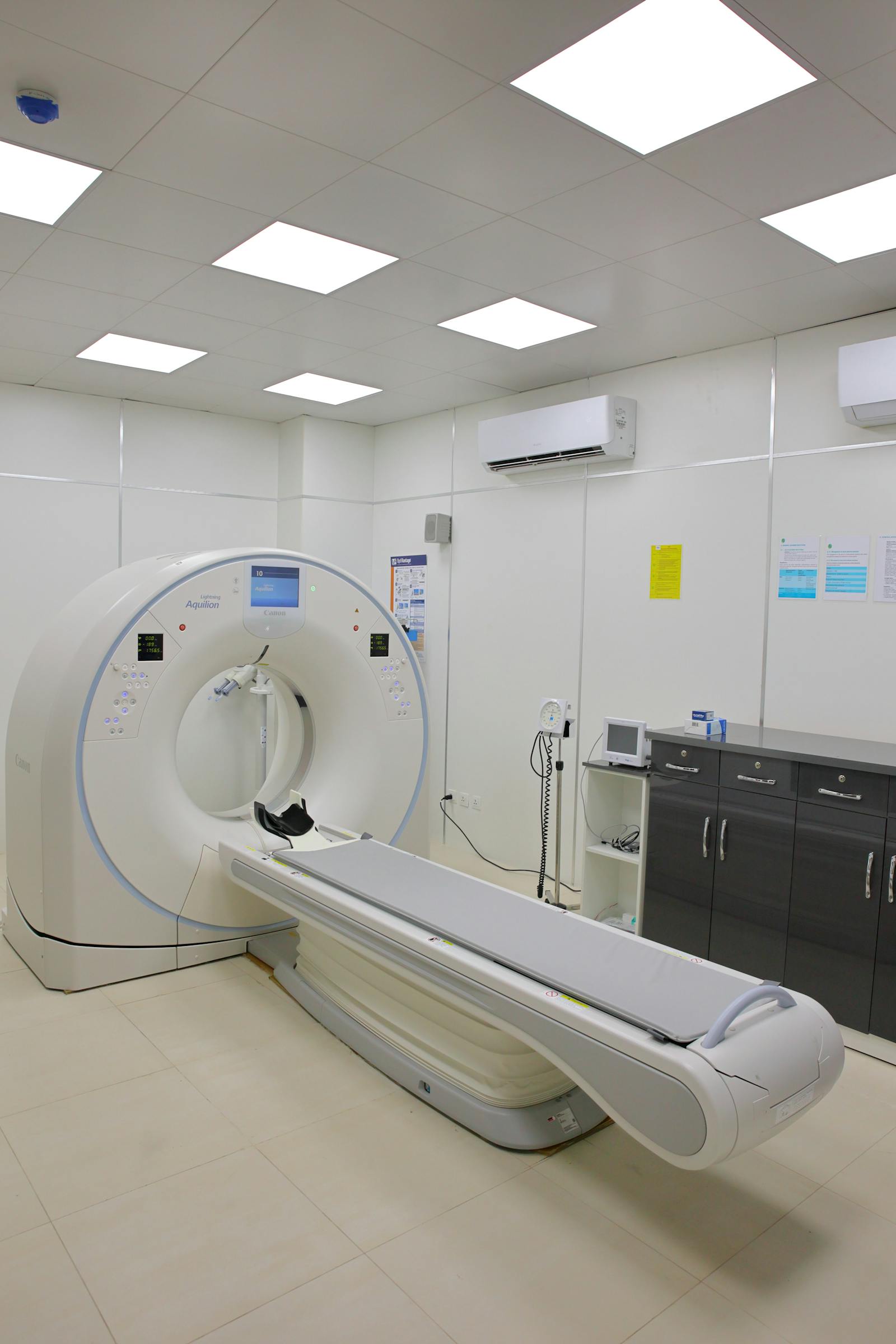
What is a CT Scan?
Computed Tomography (CT) uses a rotating X-ray source to capture detailed cross-sectional images of bones, organs, and blood vessels in seconds.
CT is especially useful for trauma, chest and abdominal imaging, suspected stroke, and vascular studies.
Before your appointment
What to wear
Comfortable clothing without metal. You may be asked to change into a gown depending on the area being scanned.
Eating and drinking
For abdominal or pelvic CT with contrast, do not eat for 4 hours beforehand. Clear liquids are fine. For most other CTs you can eat and drink normally.
Medication
Take your medications as usual. If you take metformin and are getting IV contrast, follow your provider's instructions on holding it after the exam.
What to bring
- Photo ID
- Insurance card or attorney lien paperwork
- Your prescription or referral
- Recent lab results (creatinine/eGFR) if you have kidney disease
- List of allergies, especially to iodine or contrast
The day of your scan
Arrival and check-in
Arrive 15 minutes early. If oral contrast is required, you'll drink it over 30–60 minutes before the scan.
What happens during the scan
You'll lie on a table that moves through a donut-shaped scanner. The machine is open on both ends and quiet. If you're getting IV contrast, you may feel a warm flush for about 30 seconds. Stay still and follow breath-holding instructions.
How long it takes
The scan itself takes only a few minutes. Plan for 30–60 minutes total including check-in and any contrast prep.
After your scan
Drink extra water for the rest of the day if you received contrast. Resume normal activities immediately. Results are typically reported within 24 hours.
Common concerns
Radiation exposure
CT does involve a small dose of ionizing radiation. Our scanners use dose-reduction technology to keep exposure as low as possible while still producing diagnostic images.
Iodine contrast
IV contrast helps highlight blood vessels and organs. Tell us if you've had a contrast reaction or have kidney disease — we may need labs or a premedication plan.
Pregnancy
CT scans are generally avoided during pregnancy unless medically necessary. Always tell the technologist if you are or may be pregnant.
Frequently asked questions
Is a CT scan painful?
No. The scan is painless. You may feel a brief warm sensation if IV contrast is used.
How is a CT different from an MRI?
CT is faster and better for bones, lungs, and acute trauma. MRI gives more detail in soft tissue and uses no radiation.
Can I drive home after?
Yes. Unless you received sedation, you can drive yourself home.
Do I need contrast?
It depends on what your provider is looking for. Your prescription will specify.
How long until I get results?
Most CT reports are available within 24 hours, sooner for stat orders.
Schedule your CT Scan
Find a location near you offering CT Scan, or book online 24/7.
Safety information for your CT Scan
Read these before your appointment if any apply to you.