
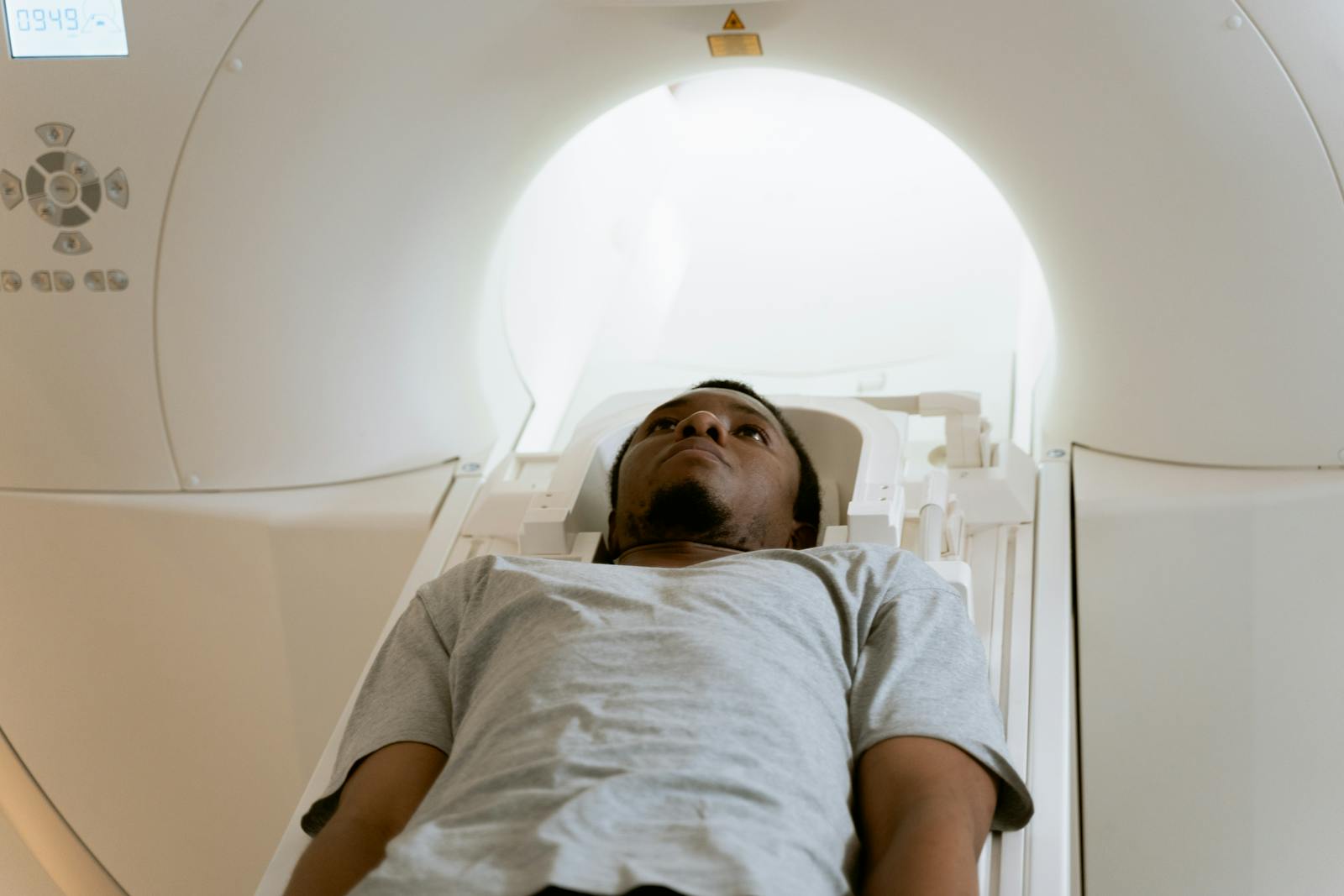
What is a MRI?
Magnetic Resonance Imaging (MRI) uses a strong magnetic field and radio waves — not radiation — to create highly detailed images of organs, soft tissue, joints, and the nervous system.
Your radiologist can use these images to diagnose injuries, tumors, joint problems, and many neurological conditions with exceptional clarity.
Before your appointment
What to wear
Loose, comfortable clothing free of any metal — no zippers, buttons, underwires, or metallic prints. You'll be asked to change into a gown if needed.
Eating and drinking
For most MRIs you can eat and drink normally. For abdominal or pelvic MRIs you may be asked to fast for 4 hours beforehand. Our team will confirm in advance.
Medication
Take your usual medications unless your doctor says otherwise. If you take anti-anxiety medication for claustrophobia, plan to have someone drive you home.
What to bring
- Photo ID
- Insurance card or attorney lien paperwork
- Your prescription or referral
- A list of prior surgeries and implants (pacemakers, stents, clips, plates)
- Prior imaging on CD if from outside our network
The day of your scan
Arrival and check-in
Plan to arrive 15 minutes early to complete a brief metal-safety screening form. You'll remove jewelry, glasses, hearing aids, and any metallic items.
What happens during the scan
You'll lie on a padded table that slides into the MRI scanner. The machine is loud — you'll wear ear protection and may listen to music. A technologist watches you the entire time and you can speak to them through an intercom. Stay as still as possible during each sequence.
How long it takes
Most exams take 30–60 minutes. Multi-region scans (e.g., full spine) can run 60–90 minutes.
After your scan
You can return to normal activities immediately. A board-certified radiologist will read your study and send a report to your ordering provider, typically within 24 hours. You can also view results in the Patient Portal.
Common concerns
Claustrophobia
We offer open and wide-bore MRI systems at many of our locations. If you're concerned about enclosed spaces, let us know when scheduling — we can route you to the right facility and discuss oral sedation options with your provider.
Contrast (gadolinium)
Some MRI exams use a gadolinium-based contrast injected into a vein. Side effects are rare. Tell us if you have kidney disease, are pregnant, or have had a contrast reaction in the past.
Implants and devices
Most modern implants are MRI-safe, but we screen every patient. Bring documentation of any pacemaker, neurostimulator, cochlear implant, or surgical hardware so our techs can verify compatibility.
Pregnancy
MRI is generally considered safe during pregnancy, but contrast is usually avoided unless medically necessary. Always tell us if you are or may be pregnant.
Frequently asked questions
Will the MRI hurt?
No. The scan itself is painless. The most common discomfort is having to stay still on the table for the duration of the exam.
Why is the MRI machine so loud?
The magnets create knocking and humming sounds during each sequence. We provide ear protection and music to help.
Can I bring someone with me?
Yes. A friend or family member can sit in the control area, and in some cases inside the scan room after metal screening.
How soon will I get results?
A board-certified radiologist typically reads your study within 24 hours. Your ordering provider will share the report with you.
Do I need an IV?
Only if your exam uses contrast. Your prescription will specify whether contrast is needed.
Schedule your MRI
Find a location near you offering MRI, or book online 24/7.
Safety information for your MRI
Read these before your appointment if any apply to you.