CT Angiography Explained — With vs. Without Contrast
What CT angiography is, why iodinated contrast is essential to it, and how it differs from a non-contrast CT.
CT angiography (CTA) is a specialized CT examination of blood vessels. Patients often ask how it differs from a "regular" CT — the answer comes down to iodinated contrast, timing, and acquisition protocols.
This article is educational. It does not replace medical advice. Your physician should decide whether CTA is the right study for you.
The role of contrast
A standard, non-contrast CT shows differences in tissue density: bone is bright, lung is dark, and most soft tissues fall somewhere in between. Blood vessels are visible only as faint outlines, and the lumen — the inside of the vessel — is essentially indistinguishable from surrounding soft tissue.
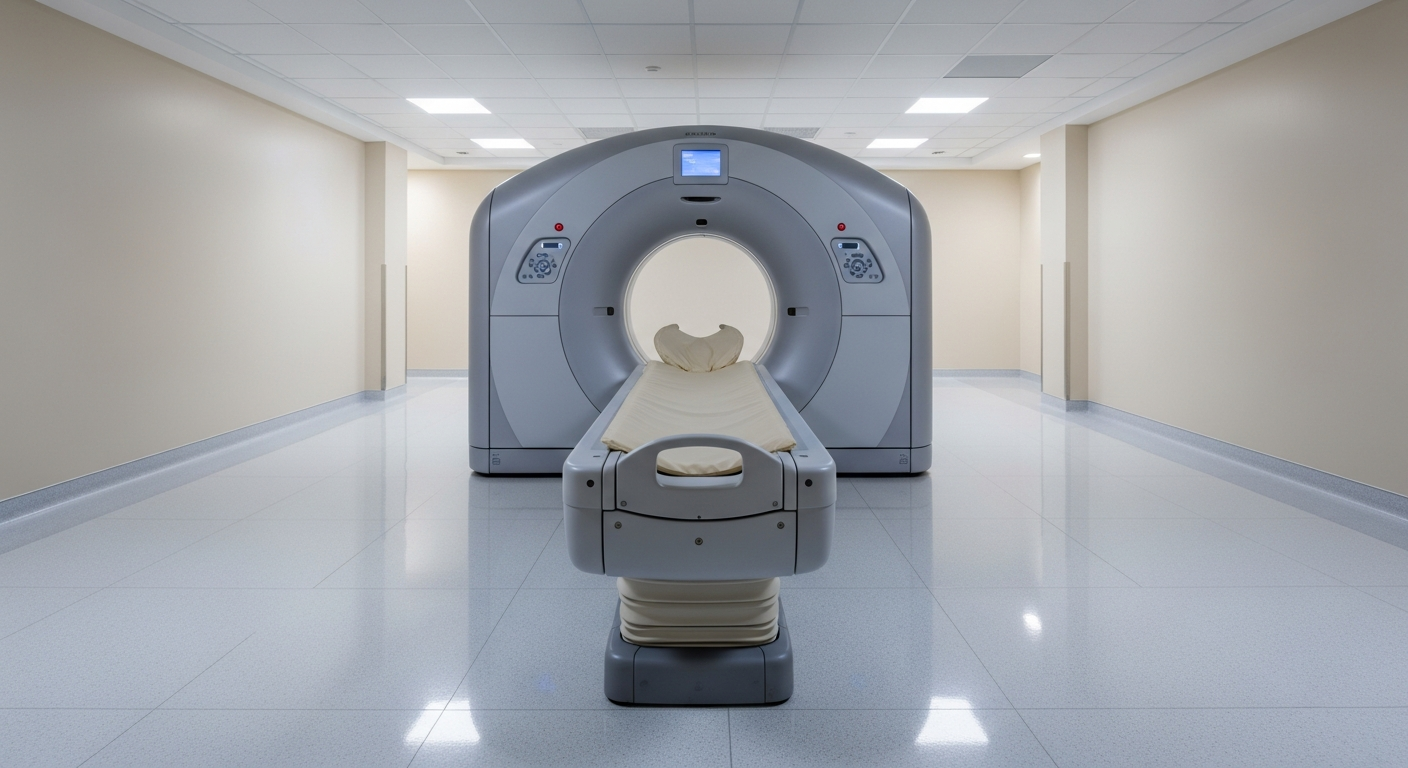
CT angiography solves that by injecting iodinated contrast through an IV at high flow and scanning at the exact moment the contrast fills the vessels of interest. The result is a sharp, detailed map of the vascular tree — arteries, veins, or both — that the radiologist can rotate, reformat, and measure on a workstation.
In other words, you cannot do CT angiography without contrast. A "CT without contrast" is not a CTA; it is a different study answering a different question.
Common indications
CT angiography is used for many vascular questions, including:
- Coronary CTA (CCTA) for the coronary arteries in stable chest pain.
- Pulmonary CTA for suspected pulmonary embolism.
- Aortic CTA for aneurysm, dissection, or post-operative follow-up.
- Carotid and intracranial CTA for stroke work-up.
- Peripheral CTA for arterial disease in the legs.
Precise Imaging performs CT angiography at select locations. Your scheduler will confirm availability for the protocol your provider has ordered.
What to expect on the day
Plan to arrive 20–30 minutes before your appointment. The technologist will place an IV — typically in the arm — and review your kidney function and any contrast allergies. Some CTA protocols (especially coronary CTA) require a slow heart rate; in those cases your provider may prescribe a short-acting beta blocker, and you'll be asked to avoid caffeine for 24 hours.
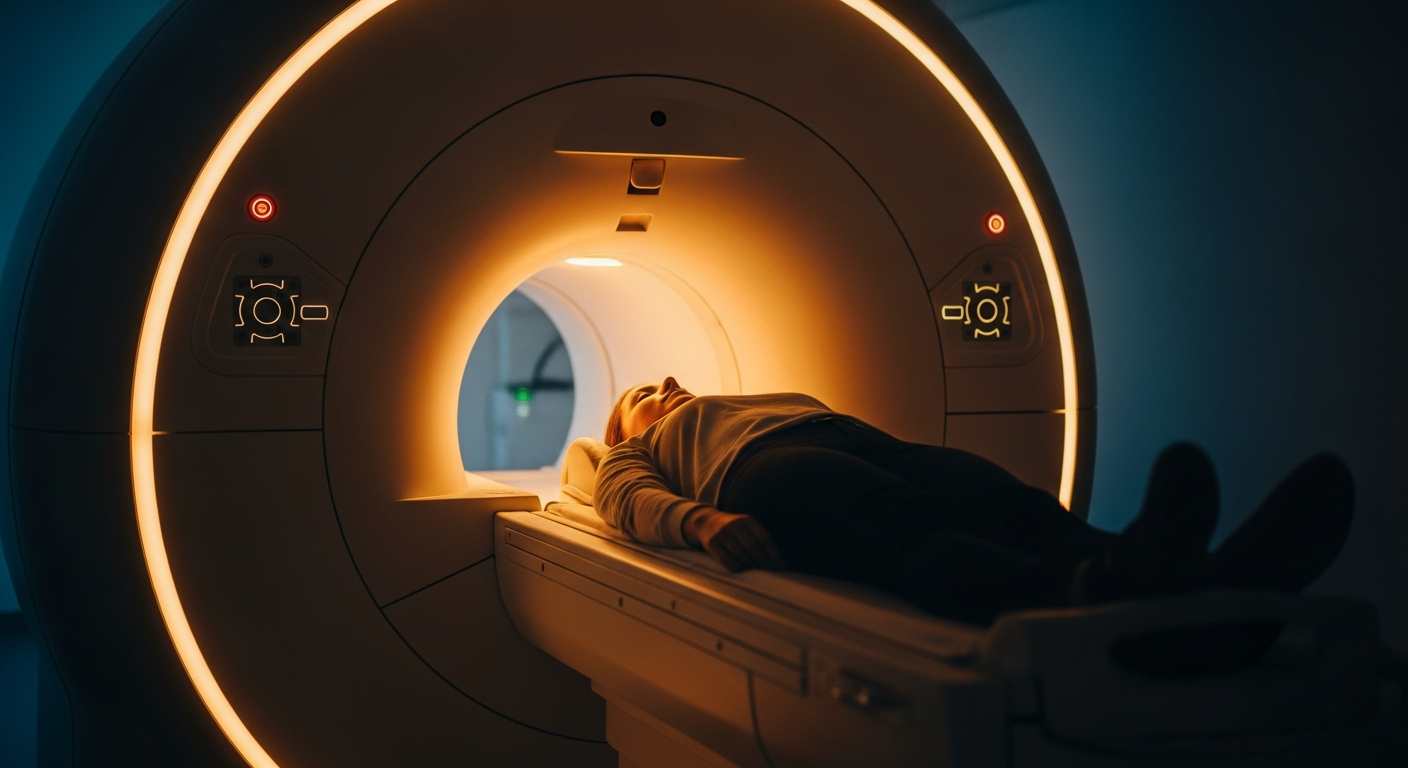
The scan itself usually takes 10–20 minutes once you are positioned. Contrast injection feels warm and sometimes produces a brief metallic taste — both are normal. You'll be asked to hold your breath for short periods so the images stay sharp.
Drink plenty of water for the rest of the day to help your body clear the contrast.
Risks and considerations
Iodinated contrast is safe for most patients. Important considerations include:
- Kidney function. Patients with significantly reduced kidney function may need a different study or pre-hydration. Your scheduler will review your most recent creatinine.
- Allergy. A prior reaction to iodinated contrast may require pre-medication or a different study.
- Pregnancy. CT uses ionizing radiation. CTA in pregnancy is reserved for situations where the benefit clearly outweighs the risk.
- Metformin. Patients on metformin may be asked to hold the medication for a short period around the scan.
Difference from MR angiography
MR angiography (MRA) uses MRI rather than CT to image vessels. Precise Imaging does not currently offer MRA — when your provider orders it, you'll be referred to a center that performs it.
After the scan
A sub-specialty radiologist interprets the study and issues a report that is typically signed within 24 to 48 hours and delivered to your ordering provider.
Frequently asked questions
Is CTA the same as a "regular CT with contrast"? No. A routine contrast-enhanced CT is acquired during the portal venous phase — useful for solid organs and tumor work-ups — but the timing and reconstructions are not optimized for vessel lumens. CTA uses a precisely timed arterial-phase bolus and thin, high-resolution reconstructions designed specifically to map the vascular tree the radiologist is asked about.
How much radiation is involved? A CTA dose varies by body part, scanner, and protocol, but modern scanners use dose-reduction techniques (iterative reconstruction, automatic tube current modulation, prospective ECG gating for cardiac studies) to keep exposure as low as reasonably achievable. Your provider weighs that radiation exposure against the diagnostic benefit when ordering the study.
Will I need to fast? Most outpatient CTA protocols ask patients to avoid solid food for two to four hours before the appointment to reduce the chance of nausea after contrast. Clear liquids are usually permitted. Your scheduler will confirm the exact preparation for the specific protocol your provider ordered.
How long are the images stored? Studies performed at Precise are archived in our PACS so the radiologist (and your provider) can re-review them as needed. You can request copies on CD or via secure portal at any time.
What about pre-medication for allergies? Patients with a documented prior moderate or severe reaction to iodinated contrast typically receive a 13-hour or 5-hour oral steroid pre-medication regimen prescribed by their provider. Mild prior reactions are managed case-by-case. Tell our scheduling team about any prior contrast reaction so we can coordinate with the ordering provider.
Related Precise services
CT angiography is performed at select Precise Imaging CT locations — the CT service page lists facilities, hours, and current availability. Many of the same locations also offer cardiac MRI for tissue-level evaluation of the heart muscle, and our broader MRI program for non-cardiac questions. Walk-in X-ray at most locations supports any pre-procedure or follow-up bony imaging.
Disclaimer
This article is for general patient education and does not replace medical advice from your physician. Imaging studies should be ordered and interpreted by qualified providers.
For more, see the cardiac imaging hub and our companion articles on when to get a cardiac MRI and chest pain imaging work-up.