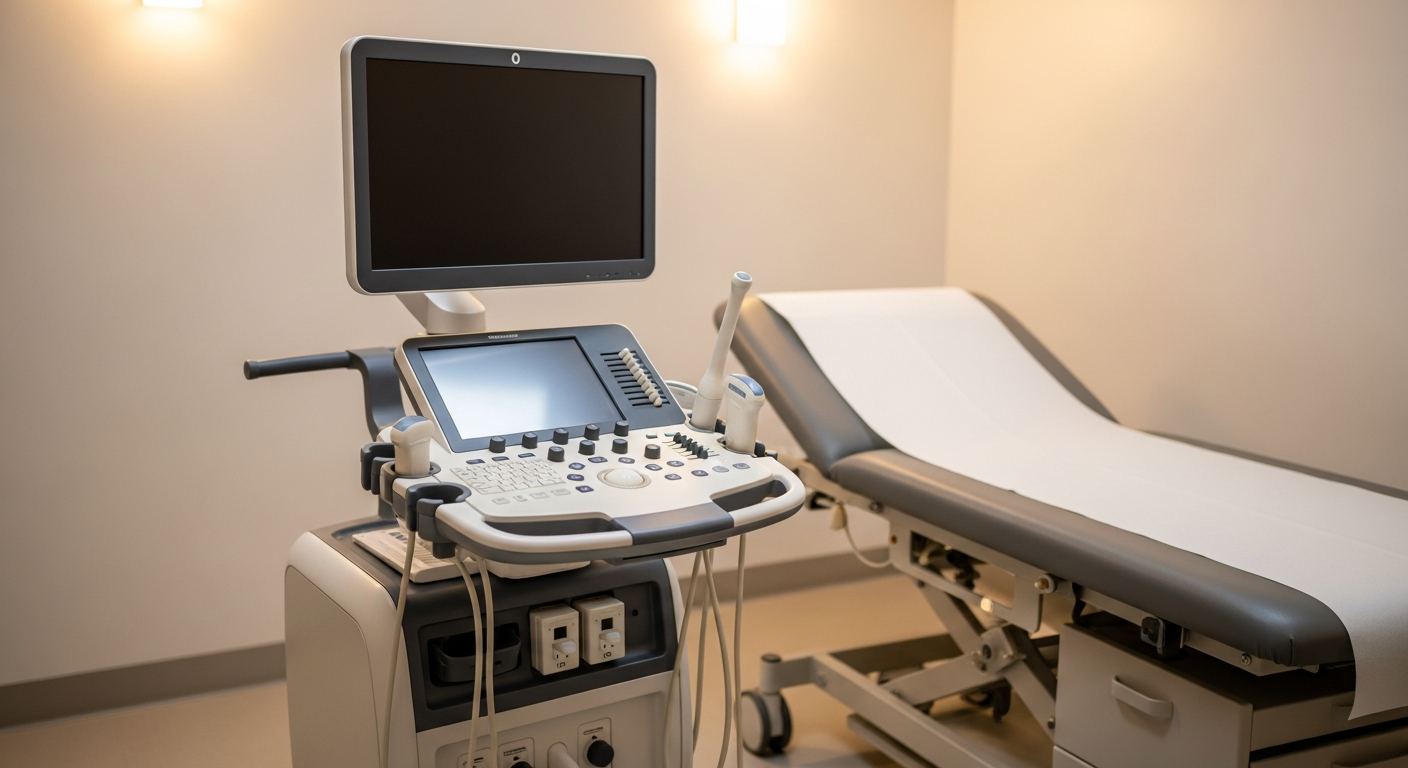
CT vs X-Ray — Which Imaging Test Does Your Doctor Need?
X-ray and CT both use ionizing radiation to image bone and tissue, but they answer very different clinical questions. Here's how physicians choose between them.
X-ray and CT scan are both radiation-based imaging tools, but the difference in detail, dose, and diagnostic power is dramatic. Understanding how they differ helps you know what to expect and why your doctor chose one over the other.
TL;DR comparison
| Feature | X-Ray | CT |
|---|---|---|
| How the image is made | Single-pass X-ray beam through the body | Rotating X-ray beam + computer reconstruction into cross-sections |
| Best at showing | Bone alignment, fractures, lung fields, hardware | Internal organs, complex fractures, bleeding, vascular anatomy, soft-tissue masses |
| Ionizing radiation dose | Very low — 0.001–1.5 mSv depending on body part | Moderate — 2–10 mSv per study |
| Typical scan time | 5–15 minutes (positioning + exposure) | 30 seconds – 5 minutes |
| Cross-sectional images? | No — flat 2-D projection | Yes — detailed 3-D reconstructible slices |
| Contrast used? | Rarely | Often — iodinated IV or oral contrast |
| Typical out-of-pocket (cash) | Lowest of all imaging | Moderate |
| Available at Precise | Yes | Yes — multi-detector CT |
How each modality works
An X-ray passes a single beam of ionizing radiation through the body onto a detector. Dense structures like bone absorb most of the radiation and appear white; air-filled structures like lungs appear dark. The image is a flat 2-D projection — overlapping structures can obscure each other. It is fast, inexpensive, and carries a very low radiation dose.
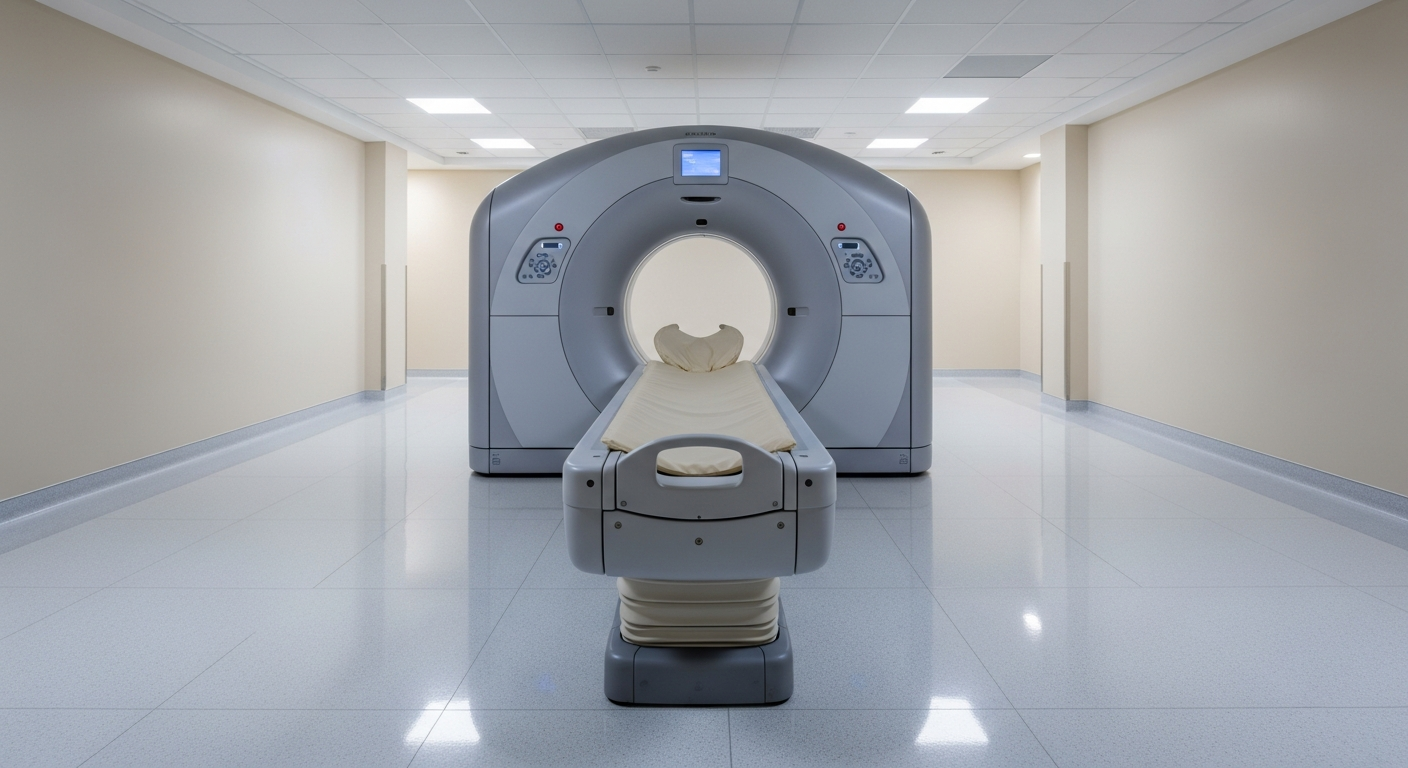
A CT scan rotates a narrow X-ray beam 360° around the body while hundreds of detectors record transmission data from every angle. A computer then reconstructs the data into cross-sectional slices (typically 0.5–5 mm thick) that can be viewed in any plane and rendered in 3-D. CT reveals detail — and can distinguish structures that overlap on plain X-ray — but uses considerably more radiation.
When X-ray is the right choice
- Suspected simple limb or rib fracture as the first study
- Chest screening — pneumonia, pneumothorax, pleural effusion, cardiomegaly
- Spinal alignment and scoliosis assessment (standing films)
- Post-operative hardware follow-up (joint replacement, spine rods)
- Dental and jaw evaluations (panoramic X-ray)
- Repeated surveillance where cumulative radiation matters
When CT is the right choice
- Complex, suspected, or equivocal fractures (pelvis, spine, wrist, face)
- Trauma evaluation — internal bleeding, organ injury, multiple-region assessment
- Acute chest pain work-up (pulmonary embolism, aortic pathology — CT angiography)
- Abdominal/pelvic pain — appendicitis, bowel obstruction, kidney stones, masses
- Head imaging — acute stroke, hemorrhage, skull fracture
- Cancer staging and treatment planning
- Surgical planning requiring 3-D bone or vascular anatomy
Radiation and safety
X-ray dose is very low — a chest X-ray delivers roughly 0.1 mSv, about equivalent to a few days of natural background radiation. A lumbar spine series is about 0.5–1.5 mSv.
CT dose is higher — typically 2–10 mSv per study, and up to 20 mSv for complex multi-phase protocols. Modern dose-reduction software (iterative reconstruction, automatic exposure control) has cut doses significantly. For a single diagnostic exam, the absolute risk remains very small — but your physician weighs it against the clinical benefit, especially for children, pregnant patients, and those who need repeat imaging.
Contrast. X-rays rarely use contrast. CT frequently adds iodinated contrast (IV or oral) to enhance organs and vessels. If you have reduced kidney function or a prior contrast reaction, tell your scheduler before your appointment.
Speed and cost
X-ray is the fastest and lowest-cost imaging exam available. A CT costs more and uses more radiation, but it provides information that often makes further imaging unnecessary — so a single CT can sometimes be more cost-effective than an X-ray followed by multiple follow-up studies.
How to decide with your doctor
Your physician will consider:
- What they need to see. Fracture alignment in a finger → X-ray. Complex pelvis fracture with suspected vascular injury → CT.
- The patient's age and radiation history. Children and patients with repeated imaging benefit from the lower X-ray dose whenever it answers the question.
- Speed. Both are fast, but CT is essentially immediate and handles multiple body regions simultaneously in trauma.
- Clinical urgency. Stable patients with uncomplicated injuries can start with X-ray. Unstable or multi-trauma patients often go straight to CT.
- Prior imaging. Bringing prior films allows side-by-side comparison.
If you have a referral and are unsure which study is ordered, call us at 800-558-2223 or book at CT scheduling or X-ray scheduling.
Frequently asked questions
Does CT show more than X-ray?+
Yes — CT produces detailed cross-sectional slices that reveal internal organs, soft-tissue masses, blood collections, and complex fractures that overlap on a plain X-ray. X-ray shows a flat 2-D shadow, which is enough for many fractures and lung assessments but hides much of the body's internal detail.
How much more radiation does CT give compared to X-ray?+
Considerably more. A chest X-ray delivers roughly 0.1 mSv; a CT of the chest typically delivers 5–8 mSv — about 50–80 times higher. For a single diagnostic study the absolute risk is still small, but your physician weighs dose against clinical benefit, especially for children and patients who need repeat imaging.
Why did my doctor order a CT instead of just an X-ray?+
Common reasons include complex or suspected fracture that X-ray might miss (pelvis, spine, wrist), abdominal or chest pain requiring organ-level detail, trauma requiring multi-region assessment, or a vascular question such as suspected pulmonary embolism or aortic pathology.
Is CT or X-ray better for fractures?+
X-ray is usually the first step for suspected fractures and is sufficient for most simple breaks. CT is ordered when the fracture is complex, involves a joint surface, occurs in a high-stakes area like the spine or pelvis, or when X-ray results are equivocal but clinical suspicion remains high.
Can I get both X-ray and CT on the same visit?+
Yes — many Precise locations have both on site. In trauma settings it is common to start with X-ray and move to CT the same day if needed. Your physician's order will specify which studies to obtain.
Is X-ray or CT more expensive?+
X-ray is the least expensive imaging exam. CT costs more and uses more radiation, but it often replaces multiple follow-up studies, which can make it more cost-effective overall. Precise provides transparent self-pay rates and a written estimate before any study.