
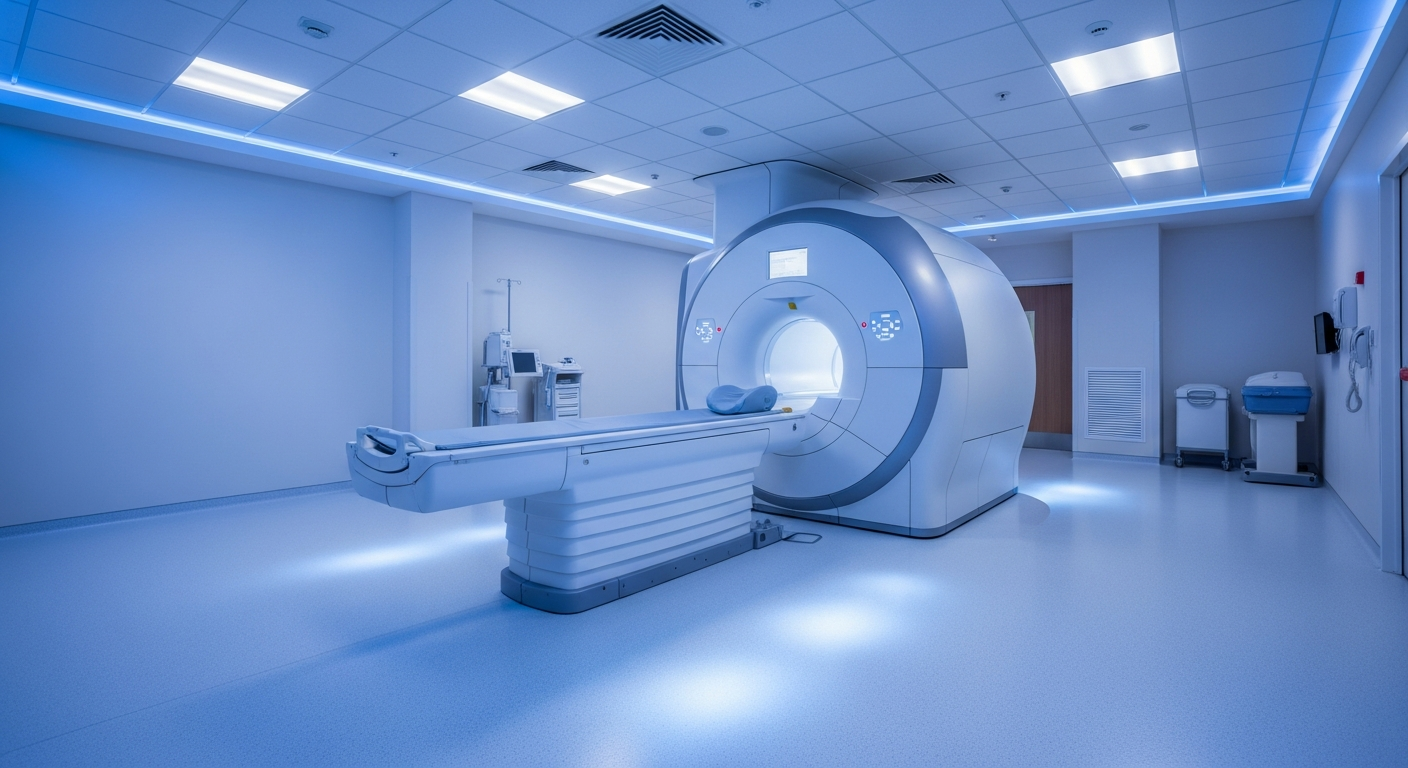
Neuro Imaging
Brain, spine, and sinus imaging with sub-specialty neuroradiology reads — 1.5T, 3T, and CT systems across California.
Neurological symptoms — persistent headache, weakness, dizziness, sensory changes, or post-traumatic complaints — often require imaging to localize a cause. Precise Imaging operates one of California's largest non-hospital fleets of MRI and CT systems and offers the imaging studies most commonly ordered to work up these complaints.
Studies are read by fellowship-trained neuroradiologists and reported to the ordering provider within 24–48 hours. The articles below explain when each study is appropriate, what it can and cannot show, and how to prepare. We do not currently offer MR angiography (MRA) — when intracranial or carotid vessel imaging is needed, your provider will refer you to a center that performs it.
Neuro Imaging services at Precise Imaging
We list only the studies Precise actually performs. When a clinical work-up needs something we don't offer, we'll say so.
Brain MRI
High-field 1.5T and 3T brain imaging for headache, stroke follow-up, MS, tumor evaluation, and post-concussion assessment.
CT Head
Fast, low-dose CT of the head for acute work-up, sinus and skull-base evaluation, or when MRI is contraindicated.
CT Sinus
Thin-slice CT for chronic sinusitis, surgical planning, and complex anatomy.
Cervical, Thoracic, and Lumbar Spine MRI
Detailed spine MRI for radiculopathy, disc and stenosis evaluation, and post-operative work-up.
We do not currently offer MR angiography (MRA). When intracranial or carotid vascular imaging is required, please refer to a center that provides it.
Supporting articles
Patient-friendly, conservatively written guides — read by our clinical team and reviewed before publication.
Neuro Imaging FAQ
When does a headache actually warrant imaging?+
Most primary headaches — including migraine and tension-type headache — do not require imaging. Imaging is generally reserved for new headaches with neurological deficit, sudden severe (thunderclap) onset, a clear change in pattern, headache in patients over 50, or red-flag features outlined by the American Headache Society. The supporting article in this hub walks through the typical decision points.
Should I get an MRI or a CT for my symptoms?+
CT is fast and excellent for acute bleeding, fracture, and sinus disease. MRI offers far greater soft-tissue detail for stroke beyond the first 24 hours, MS, tumor, and most chronic neurologic work-ups. Your referring provider will choose based on the question being asked.
Do I need contrast for a brain MRI?+
It depends on the indication. Tumor, infection, MS surveillance, and post-operative work-ups often use gadolinium contrast. Routine evaluations for headache or chronic symptoms are frequently performed without contrast.
Can I have a brain MRI if I'm claustrophobic?+
Yes. Most of our locations offer wide-bore 3T or 1.5T scanners, and Open MRI is available at select sites. Mild oral anxiolytics are available with an order from your provider. The technologist will brief you and provide hearing protection, music, and a panic button.
How long does a spine MRI take?+
A single-region spine MRI (cervical, thoracic, or lumbar) typically runs 20–30 minutes. Multi-region or contrast studies can extend to 45–60 minutes.
When will my provider get the report?+
Final reports are typically signed within 24–48 hours. STAT reads are available when clinical urgency is communicated at the time of scheduling.
Do you image children?+
We image cooperative pediatric patients who can hold still without sedation. We do not provide pediatric sedation services — when sedation is required, your provider will refer to a pediatric imaging center.
Schedule with Precise
Same-day and next-day appointments at most California locations. We accept insurance, cash, workers' comp, and personal-injury liens — call us if you have coverage questions.
Other clinical hubs
Cardiac Imaging
Non-invasive cardiac MRI and CT angiography for structural and vascular evaluation — sub-specialty reads, same-day scheduling.
Orthopedic & Sports Imaging
Joint MRI, MR arthrography, fluoroscopic arthrogram, and X-ray for orthopedic and sports-medicine work-ups — with sub-specialty MSK reads.