Arthrogram vs Standard MRI — Which One Do You Need?
An arthrogram adds contrast directly into a joint before MRI. Compare it to standard MRI — when each is preferred, what the procedure feels like, and recovery.
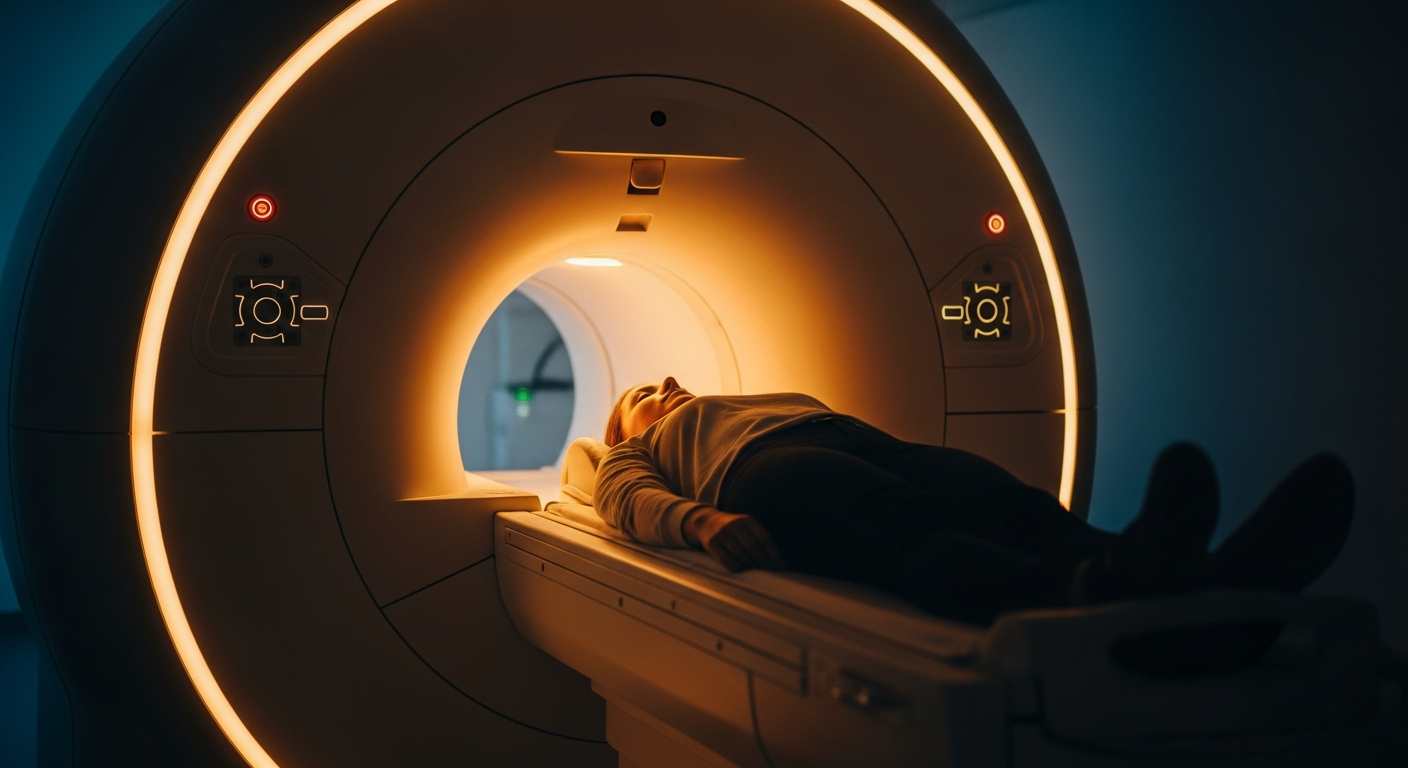
A standard MRI images a joint non-invasively. An arthrogram (specifically MR arthrogram) adds a small injection of contrast directly into the joint capsule under image guidance before the MRI, distending the joint and making subtle labral or cartilage tears far easier to see.
TL;DR comparison
| Feature | Standard MRI of joint | MR arthrogram |
|---|---|---|
| Joint injection? | No | Yes — gadolinium-based contrast directly into joint |
| Image-guidance step | Not required | Yes — fluoroscopy, ultrasound, or CT guidance |
| Typical total time | 30–45 minutes | 60–90 minutes (injection + MRI) |
| Best at showing | Most joint pathology, large structural injury | Subtle labral tears, recurrent dislocation work-up, cartilage flaps |
| Discomfort | Minimal | Mild — local anesthetic before injection |
| Recovery | None | Minor joint fullness for 24–48 hours |
| Cost | Lower | Higher (the injection is a separate procedure) |
| Available at Precise | Yes | Yes — at arthrogram-equipped sites |
How each study works
A standard MRI of a joint uses high-field MRI sequences optimized for cartilage, ligaments, tendons, and bone. The radiologist relies on the joint's natural fluid to outline structures. This is enough for most diagnoses — meniscal tears, rotator cuff tendon tears, ACL/PCL injuries, marrow edema.
An MR arthrogram adds an initial step: under fluoroscopic, ultrasound, or CT guidance, a radiologist places a thin needle into the joint capsule and injects a dilute gadolinium contrast (and often a small volume of saline and local anesthetic). The contrast distends the joint, separates adjacent structures, and outlines tears that might otherwise be missed. You then move to the MRI scanner for the imaging portion.
When standard MRI is preferred
- Most knee meniscal and ligament injuries
- Rotator cuff tendon tears (full or partial thickness)
- Most spine and large-joint imaging
- Bone marrow edema, stress fractures, osteonecrosis
- Soft-tissue mass evaluation
- Routine follow-up of prior known injury
When MR arthrogram is preferred
- Suspected shoulder labral tear (SLAP, Bankart, posterior labral)
- Recurrent shoulder instability or post-dislocation work-up
- Hip labral tear and femoroacetabular impingement (FAI)
- Wrist TFCC (triangular fibrocartilage) tear
- Elbow UCL tear in throwing athletes
- Ankle ligament tear when standard MRI is equivocal
- Post-surgical joint where scar and recurrent tear are hard to distinguish
Safety, comfort, and recovery
Radiation. Standard MRI uses no radiation. MR arthrograms add a brief fluoroscopy or CT-guidance dose for needle placement (typically very low). Ultrasound-guided injections add no radiation.
Comfort. The injection itself is preceded by local anesthetic. Most patients describe pressure or a brief pinch. The joint feels "full" or "stiff" for a day or two after the procedure as the contrast and saline are absorbed.
Allergy and bleeding risk. Reactions to intra-articular gadolinium are very rare. The needle puncture has a low infection risk handled with sterile technique. Patients on blood thinners should mention this when scheduling — we'll coordinate with your prescriber.
Cost. The arthrogram has two billable components: the joint injection (CPT) and the MRI itself. Cash rates and insurance benefits are quoted up front by our schedulers.
Activity afterward. Plan a quiet day — no strenuous activity, gym, or heavy lifting for 24 hours. Most patients return to normal activity the next day. Avoid driving immediately after if a long-acting local anesthetic was used.
How to decide with your doctor
The referring physician (often an orthopedic surgeon or sports medicine specialist) chooses based on the clinical suspicion:
- Suspected labral tear, FAI, TFCC, or recurrent instability → arthrogram is usually preferred.
- Routine joint pain, suspected meniscus, rotator cuff, or ligament injury → standard MRI is usually sufficient.
- Equivocal standard MRI with persistent symptoms → arthrogram as a second look.
- Post-surgical work-up → arthrogram often helps separate scar from recurrent tear.
To schedule, see arthrogram services or MRI services, or call 800-558-2223 to find an arthrogram-equipped location near you.
Frequently asked questions
Does the arthrogram injection hurt?+
Most patients describe pressure and a brief pinch. We use local anesthetic at the skin and guide the needle into the joint with imaging, so the procedure is typically well tolerated.
How long is the whole arthrogram appointment?+
Plan on 60–90 minutes total — the injection takes about 15–30 minutes, then the MRI portion runs roughly 30–45 minutes depending on the joint.
What can I do after an arthrogram?+
Plan a quiet day — no gym, heavy lifting, or strenuous activity for 24 hours. The joint may feel full or stiff for a day or two as the contrast and saline are absorbed. Most patients return to normal activity the next day.
When is arthrogram clearly better than standard MRI?+
For suspected shoulder labral tear (SLAP, Bankart), hip labral tear, FAI, wrist TFCC tear, and post-surgical joint evaluation, MR arthrogram outperforms standard MRI for detecting subtle pathology.
Are arthrograms safe?+
Yes. Allergic reactions to intra-articular gadolinium are very rare, and the needle-puncture infection risk is very low with sterile technique. Tell us if you are on blood thinners so we can coordinate with your prescriber.
Is an arthrogram covered by insurance?+
Most insurance plans cover MR arthrogram when ordered by your physician. The injection and the MRI are billed as two separate components. Our schedulers verify benefits and provide a written estimate before the procedure.