MRI vs CT — How to Tell Which Scan You Need
A side-by-side comparison of MRI and CT — what each does best, radiation exposure, scan time, cost, and how your physician chooses between them.
MRI and CT are the two most-ordered cross-sectional imaging studies, and they answer different clinical questions. This guide compares them head-to-head so you and your physician can pick the right test the first time.
TL;DR comparison
| Feature | MRI | CT |
|---|---|---|
| How the image is made | Strong magnetic field + radio waves | Rotating X-ray beam + detectors |
| Best at showing | Soft tissue, ligaments, brain, spinal cord, marrow | Bone, lung, acute bleeding, vascular anatomy |
| Ionizing radiation | None | Yes — a low but non-zero dose |
| Typical scan time | 20–45 minutes | 30 seconds – 5 minutes |
| Contrast agent | Gadolinium (IV) when ordered | Iodinated contrast (IV or oral) when ordered |
| Common contraindications | Some pacemakers, certain implants, severe claustrophobia | Iodine allergy, reduced kidney function (with contrast) |
| Typical out-of-pocket (cash) | Higher | Lower |
| Available at Precise | Yes — 1.5T, 3T, and Open MRI | Yes — multi-detector CT |
How each modality works
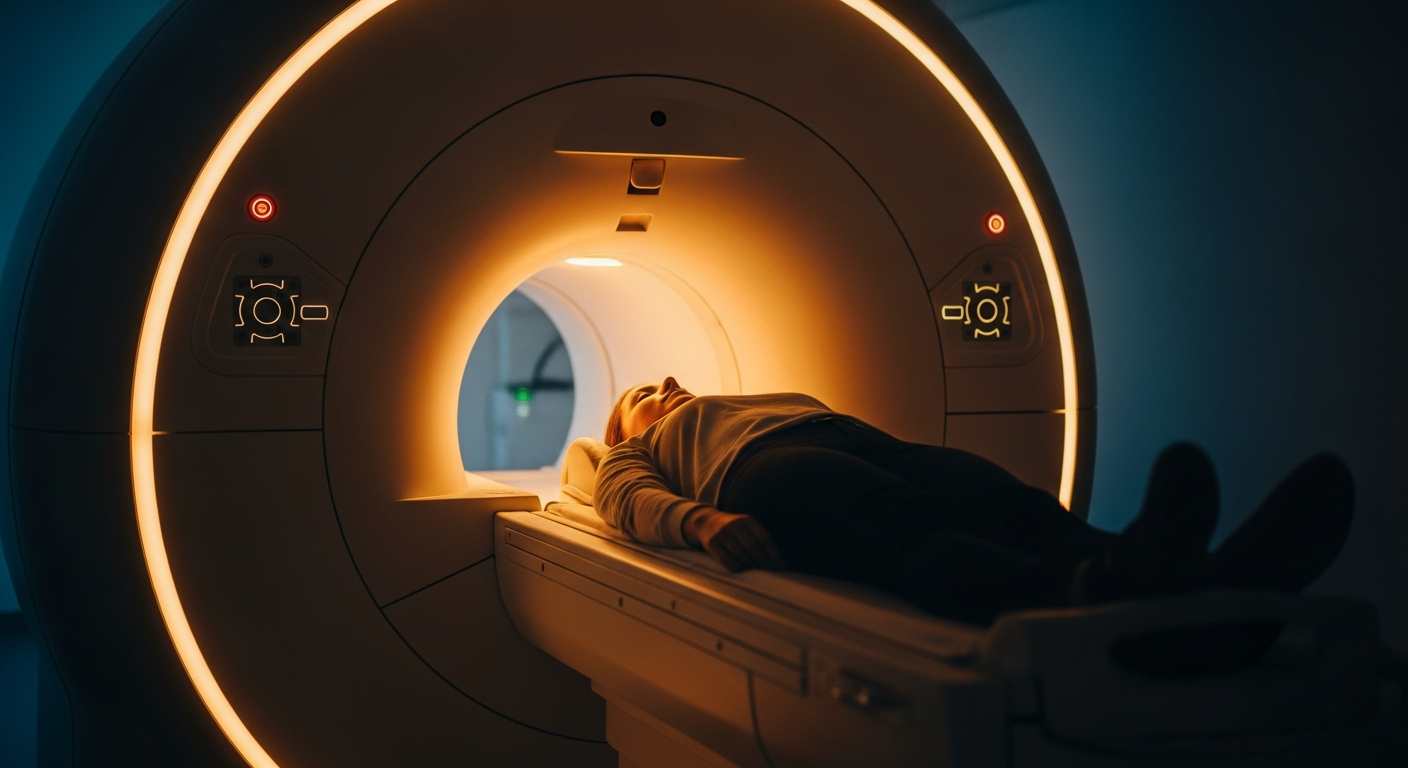
An MRI uses a powerful magnet and pulses of radio-frequency energy to map how water molecules behave in different tissues. Because soft tissues vary in their water and fat content, MRI produces exceptionally detailed pictures of the brain, spinal cord, ligaments, tendons, cartilage, and bone marrow — without any X-ray exposure.
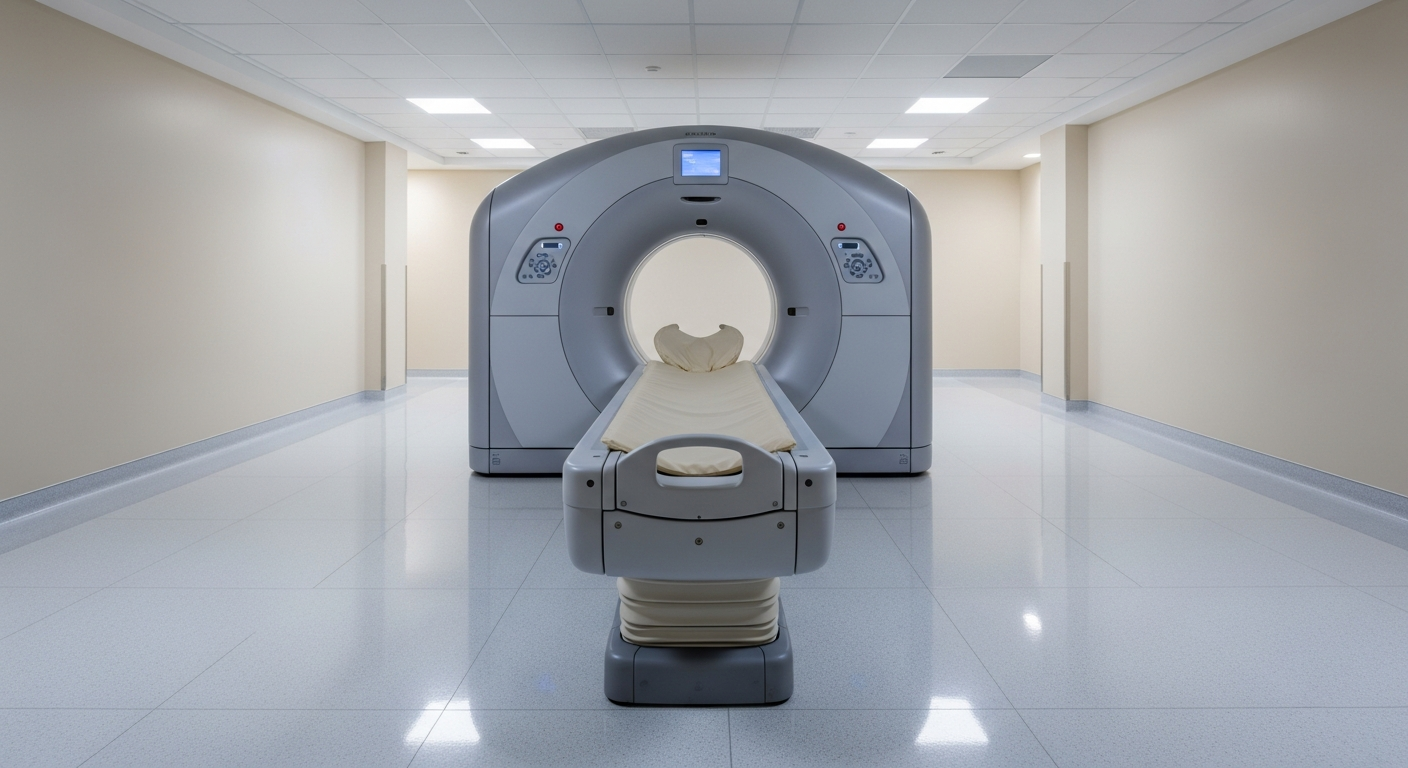
A CT scan rotates a thin X-ray beam around your body while detectors measure how much radiation passes through. A computer reconstructs the data into thin cross-sectional slices. CT excels at evaluating bone, lung tissue, calcifications, acute bleeding, and the vascular tree, and it does so in seconds — a key advantage for trauma and stroke work-ups.
When MRI is preferred
- Suspected disc herniation, nerve impingement, or spinal cord pathology
- Ligament, tendon, meniscus, or cartilage injuries
- Brain conditions: stroke follow-up, multiple sclerosis, tumors, seizures
- Joint internal derangement (knee, shoulder, hip, ankle, wrist)
- Soft-tissue masses where tissue characterization matters
When CT is preferred
- Suspected acute fracture, especially complex or spinal
- Chest imaging — pulmonary nodules, pneumonia, pulmonary embolism (CT angiography)
- Acute abdominal pain or suspected appendicitis
- Trauma where speed and bone detail are critical
- Vascular imaging (CTA) for aneurysm, dissection, or stenosis
Safety, radiation, speed, and cost
Radiation. MRI uses no ionizing radiation. CT does — typically 2–10 mSv per study, depending on the body part. That's still a small exposure for an individual diagnostic exam, but it's the main reason MRI is often preferred for younger patients and follow-up imaging.
Speed. A CT is much faster end-to-end. Most CT exams run 30 seconds to 5 minutes on the table. MRI sequences run 20–45 minutes, sometimes longer for complex or contrast-enhanced studies.
Contrast. MRI uses gadolinium-based contrast; CT uses iodinated contrast. Both have rare allergic reactions and renal considerations — your scheduler will review your kidney function and allergy history before the appointment.
Cost. CT is generally less expensive than MRI, in both insurance and self-pay scenarios. For patients paying cash, Precise publishes transparent self-pay rates and gives a written estimate before the exam.
Implants and claustrophobia. Some pacemakers, neurostimulators, and older aneurysm clips are not MRI-compatible. Severe claustrophobia is best handled in our wider-bore 3T or Open MRI suites. CT has no magnetic-field issues but is less helpful for soft-tissue diagnosis.
How to decide with your doctor
The right test depends on the clinical question, your history, and any prior imaging. Your referring physician will weigh:
- What needs to be seen. Soft tissue → MRI. Bone, lung, acute bleed, vasculature → CT.
- How fast. Suspected stroke or trauma → CT. Sub-acute or chronic symptoms → MRI is often appropriate.
- Radiation history. Patients with repeated CTs may benefit from MRI for follow-up when feasible.
- Implants and contraindications. A safety screening before MRI is mandatory.
- Insurance, prior authorization, and cost. Our schedulers verify benefits and obtain authorization for either study.
If you already have a referral and are unsure which scan it is, or if you'd like help comparing options, call us at 800-558-2223 or message your provider through the Patient Portal. To book once you've decided, visit MRI scheduling or CT scheduling.
Frequently asked questions
Is MRI safer than CT?+
MRI uses no ionizing radiation, while CT does — typically 2–10 mSv per study. For an individual diagnostic exam the CT dose is small, but MRI is generally preferred for younger patients, pregnant patients (when imaging is necessary), and repeated follow-up imaging when MRI can answer the same question.
Which is more accurate, MRI or CT?+
Neither is universally more accurate — they answer different questions. MRI is more accurate for soft tissue, ligaments, the brain, the spinal cord, and bone marrow. CT is more accurate for acute bleeding, lung tissue, calcifications, fresh fractures, and detailed vascular imaging.
How long does each scan take?+
A CT scan typically takes 30 seconds to 5 minutes on the table. An MRI usually takes 20–45 minutes per body part, and contrast-enhanced or multi-region studies can run longer.
Why did my doctor order a CT instead of MRI?+
Common reasons include speed (acute trauma, suspected stroke, chest pain), the need to evaluate bone or lungs in detail, vascular imaging (CTA), or contraindications to MRI such as certain pacemakers, neurostimulators, or severe claustrophobia.
Is MRI more expensive than CT?+
Yes, in most insurance and self-pay scenarios MRI is more expensive than CT. Precise publishes transparent self-pay rates and provides a written estimate before the exam.
Can I have both an MRI and a CT for the same problem?+
Yes, and it's common. For example, after trauma a CT may rule out fracture and bleeding the same day, and a follow-up MRI may evaluate ligament or cartilage injury when symptoms persist. Your physician will sequence the studies to answer one question at a time.