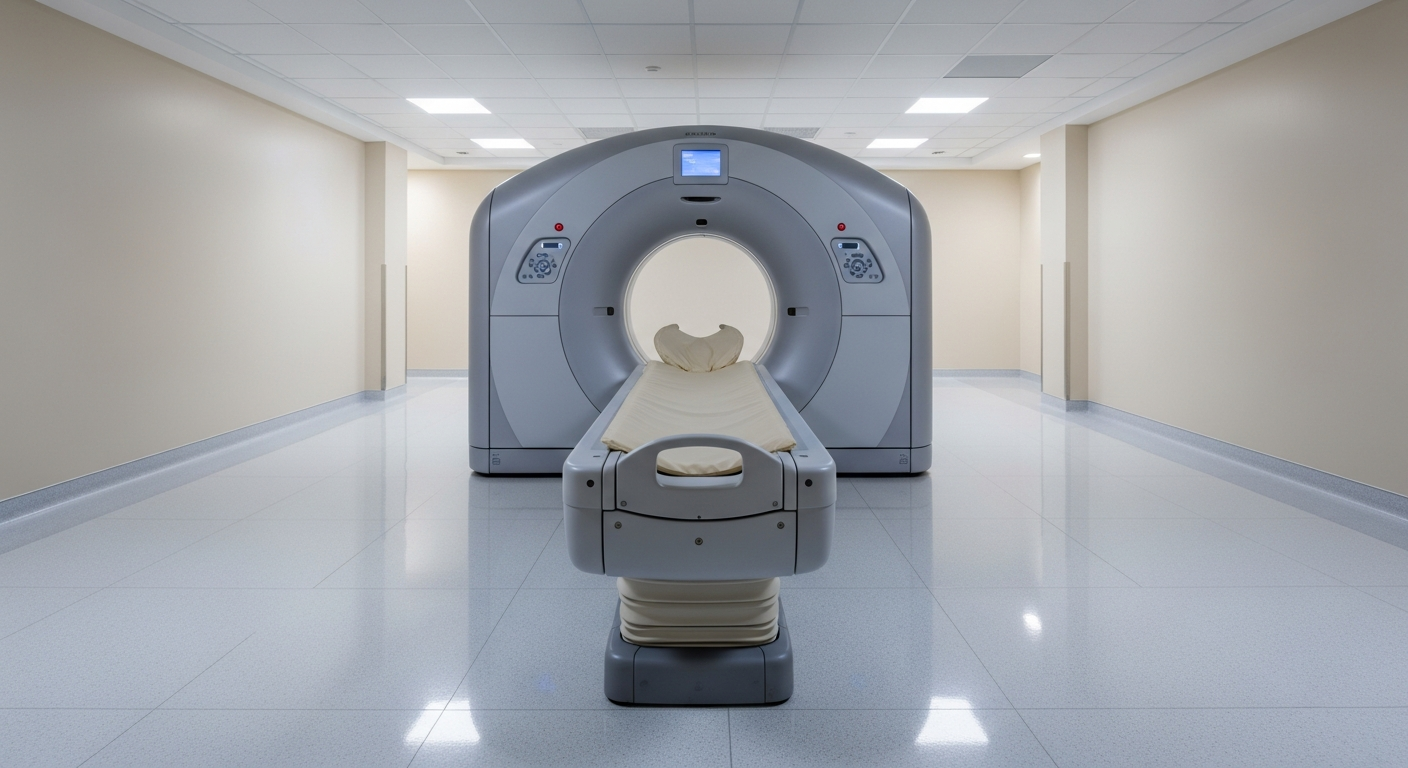
CT With or Without Contrast — What's the Difference?
A practical guide to iodinated contrast for CT scans — when it's needed, how it works, allergy and kidney considerations, and what to expect on scan day.
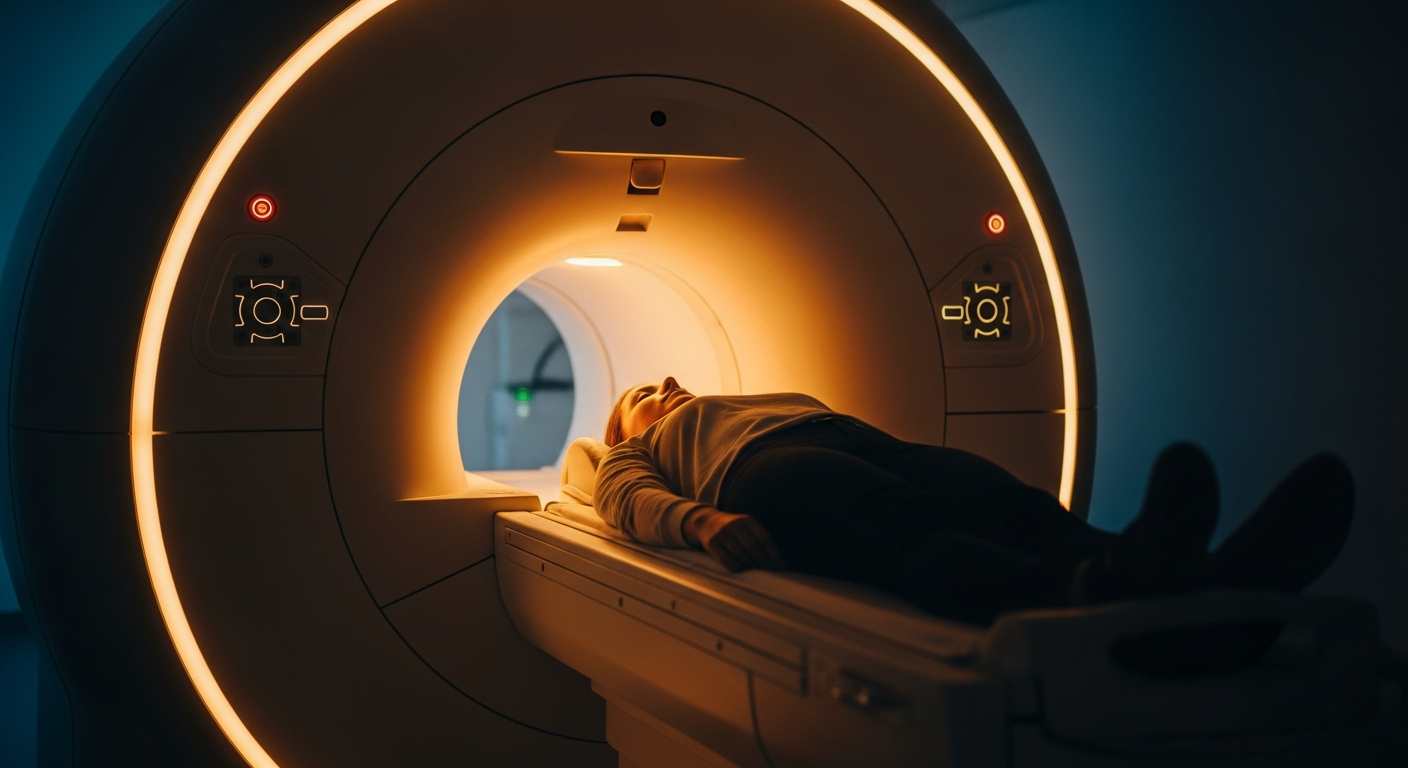
CT orders typically come specified as with contrast, without contrast, or with and without. Each protocol answers a different clinical question, and the prep is slightly different.
TL;DR comparison
| Feature | CT without contrast | CT with contrast |
|---|---|---|
| Uses an IV injection? | No | Yes — iodinated contrast |
| Typical scan time | 1–3 minutes | 5–15 minutes |
| Best at showing | Acute bleed, kidney stones, bone, lung nodules | Vessels, organ enhancement, tumors, infection, abscess |
| Fasting required | Usually no | Usually 3–4 hours for solids |
| Kidney function check | Not required | Required (recent eGFR) |
| Common allergy concern | None | Iodinated-contrast reactions |
| Cost | Lower | Higher (contrast adds a charge) |
| Available at Precise | Yes | Yes — at all CT locations |
How each study works
Without contrast. The CT scanner rotates an X-ray beam around your body while detectors measure how much radiation passes through different tissues. The computer builds thin cross-sectional images that show bone, calcifications, fresh blood, lung tissue, and overall anatomy with great speed and clarity.
With contrast. Iodinated contrast is injected through an IV (and sometimes given by mouth for abdominal studies). Iodine is dense to X-rays, so it makes blood vessels and well-perfused tissues "light up." This lets the radiologist see vessel anatomy, organ enhancement patterns, tumors, infections, and abscesses that would otherwise be invisible against surrounding soft tissue.
When contrast is needed
- CT angiography (CTA) — chest, abdomen, neck, runoff vessels
- Suspected tumor, abscess, or infection anywhere in the body
- Acute abdominal pain — appendicitis, diverticulitis, bowel ischemia
- Cancer staging and follow-up imaging
- Pulmonary embolism work-up (CT-PA)
- Trauma to the chest, abdomen, or pelvis with possible vascular injury
- Suspected aortic dissection or aneurysm
When contrast is not needed
- Suspected kidney stones (non-contrast renal protocol is standard)
- Acute head trauma or stroke work-up (initial non-contrast head CT)
- Lung nodule follow-up with a low-dose protocol
- Acute fracture evaluation when anatomy is the only question
- Sinus or facial bone imaging for chronic sinusitis or trauma
Safety, speed, and cost differences
Radiation. Both involve ionizing radiation. The dose depends on the body part and protocol — typically 2–10 mSv. Modern dose-reduction techniques and iterative reconstruction keep the dose as low as reasonably achievable.
Kidney function. Iodinated contrast is filtered by the kidneys. Patients with reduced kidney function (low eGFR) are at higher risk for contrast-associated kidney injury. We require a recent creatinine/eGFR for adult patients receiving IV contrast and will adjust the protocol or skip the contrast if needed.
Allergy. Iodinated contrast reactions are more common than gadolinium reactions but still uncommon overall. Mild reactions (hives, itching) are most typical; severe reactions are rare. Patients with a prior reaction are pre-medicated per the standard ACR protocol or switched to a non-contrast or MRI-based study.
Metformin. Patients on metformin who receive IV contrast may be asked to hold metformin for 48 hours after the scan in select circumstances. Our schedulers and your physician will advise.
Pregnancy. CT — with or without contrast — is generally avoided in pregnancy unless clearly needed. If you are or might be pregnant, tell us before the scan.
Speed and prep. Without-contrast CT is faster end-to-end. With-contrast adds time for the IV start, the injection, and (sometimes) oral contrast preparation. Plan an extra 30–45 minutes for a contrast-enhanced exam.
Cost. Contrast adds a charge for the agent and IV access. Both insurance and self-pay rates vary by protocol — our schedulers will quote either before you commit.
How to decide with your doctor
The referring physician picks the protocol when they write the order. Practical notes for patients:
- Bring your order or referral so we run exactly the protocol your physician requested.
- Tell us about kidney disease, prior contrast reactions, pregnancy, or metformin use when scheduling.
- Fast appropriately — usually 3–4 hours for solids if contrast is planned. Clear liquids and most medications are typically fine.
- Bring prior imaging on CD if you have it — comparisons help the radiologist decide whether to repeat contrast.
To schedule a CT, see CT services and locations or call 800-558-2223. For the related comparison, see MRI vs CT — How to Tell Which Scan You Need.
Frequently asked questions
Why does CT contrast feel warm when injected?+
A warm flushing sensation throughout the body — and sometimes a brief metallic taste — is a normal, expected effect of the iodinated contrast injection. It usually passes within a minute and is not an allergic reaction.
Can I get a CT with contrast if I'm allergic to shellfish?+
Shellfish allergy is not, by itself, a contraindication to iodinated contrast — the iodine in seafood is biologically different from the contrast iodine. Tell us about any prior reaction to CT contrast itself, and we'll pre-medicate or pick an alternative study if needed.
Do I need to fast before a CT scan?+
If your scan uses IV contrast, plan to fast from solid food for 3–4 hours beforehand. Clear liquids and most prescription medications are typically fine. Non-contrast CT usually requires no fasting.
What does 'with and without contrast' mean for CT?+
It means the radiologist acquires images before the contrast injection, then again after, so they can compare enhancement patterns. It's used for select tumor, infection, vascular, and post-surgical evaluations.
Can I drive home after a CT with contrast?+
Yes — no sedation is used and most patients feel completely normal afterward. Drink plenty of water for the rest of the day to help your kidneys clear the contrast.
What if I'm on metformin?+
In most outpatient situations, no change is needed. For patients with reduced kidney function or higher-volume contrast studies, your physician may ask you to hold metformin for 48 hours after the scan. Tell us at scheduling and we'll coordinate with your prescriber.