CT Angiography (CTA) vs Standard CT — What's the Difference?
CT angiography uses precisely-timed iodinated contrast to image blood vessels in detail. Compare CTA to a standard contrast-enhanced or non-contrast CT.
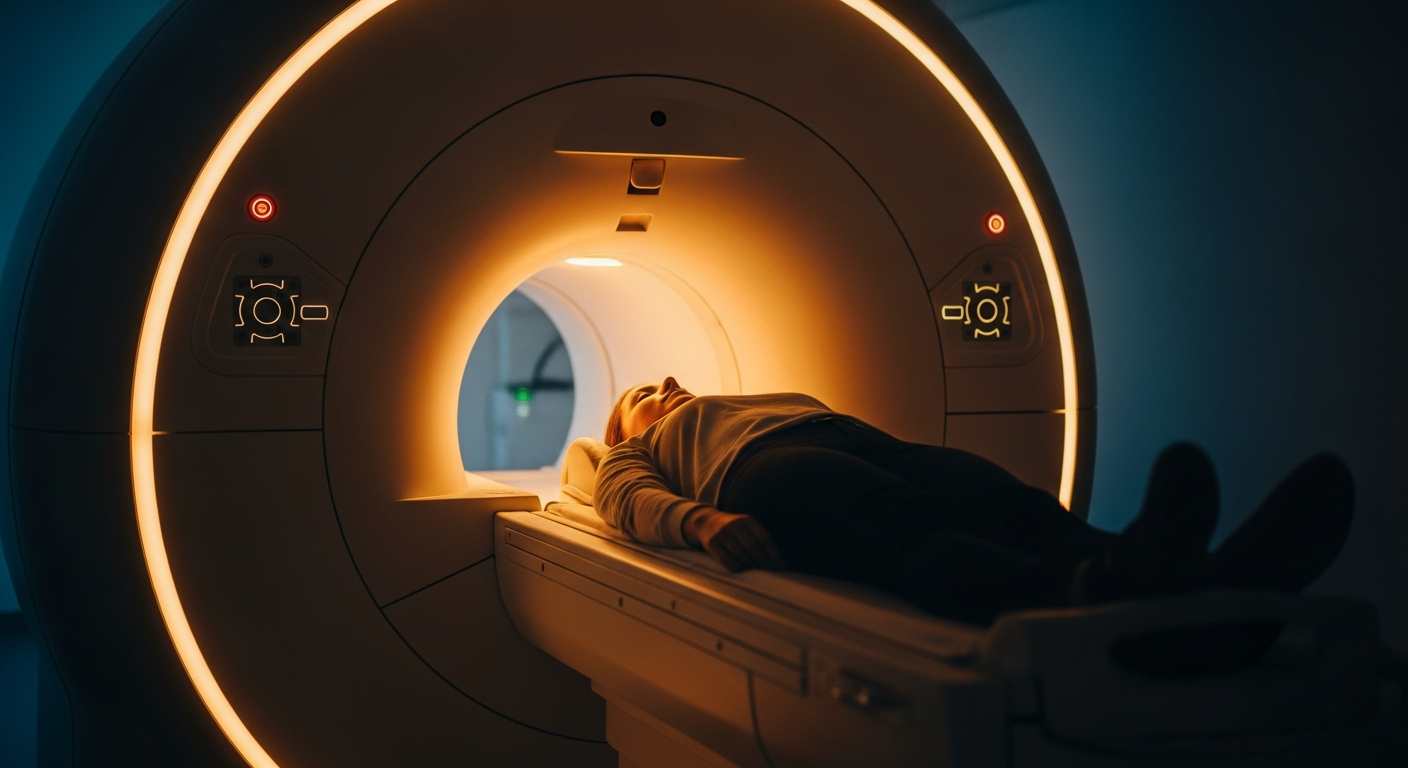
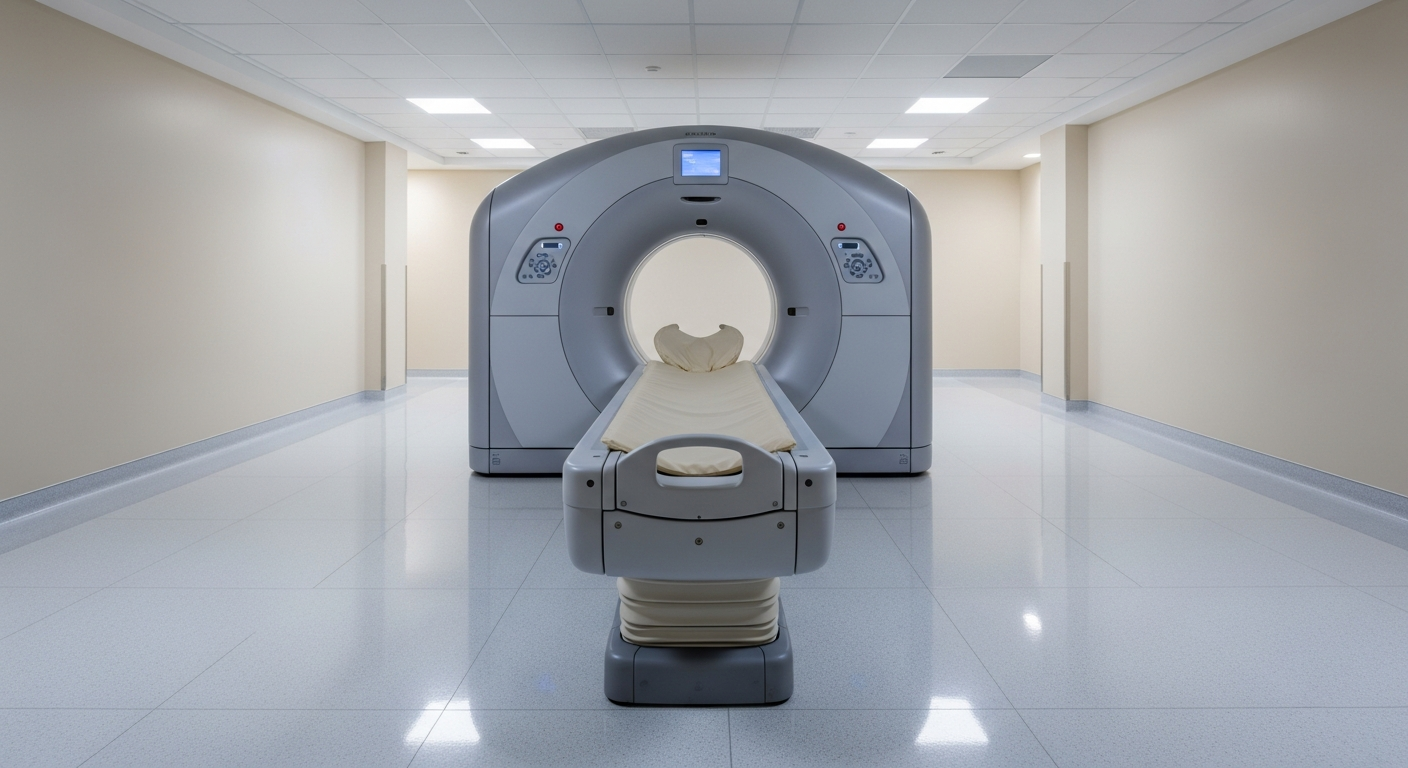
A CTA (CT angiography) is a CT scan timed precisely with an IV iodinated contrast injection so the radiologist captures peak enhancement of the arteries (or veins, in a CTV). It's the dedicated vascular CT exam.
TL;DR comparison
| Feature | Standard CT (with or without contrast) | CTA (CT angiography) |
|---|---|---|
| Primary target | Organs, bone, lung, abdomen, soft tissue | Arteries (or veins, for CTV) |
| Contrast timing | Routine — image after a fixed delay | Precisely timed to arterial peak |
| Contrast volume | Standard | Higher rate, often larger volume |
| IV requirement | 20 gauge typically | 18–20 gauge antecubital IV preferred |
| Typical scan time | 1–10 minutes | 5–15 minutes including timing run |
| Best at showing | Anatomy, masses, infection, fluid collections | Aneurysm, dissection, stenosis, embolism, vascular malformations |
| Kidney function check | Required if contrast used | Required — always |
| Cost | Lower | Higher (specialized protocol) |
| Available at Precise | Yes — at all CT locations | Yes — at CTA-equipped locations |
How each study works
A standard CT with contrast acquires images after a fixed delay (e.g., 60–80 seconds for a routine abdominal CT). The radiologist sees solid organs and parenchyma well, with vessels opacified as a secondary finding.
A CTA uses bolus tracking — the scanner waits and watches the aorta in real time, then triggers acquisition the instant contrast reaches peak arterial concentration. The IV bolus is delivered faster, often with a saline chaser. The result is crisp, high-contrast imaging of the arterial tree at exactly the right phase.
When standard CT is preferred
- Routine evaluation of abdominal or pelvic pain
- Lung nodule follow-up or pneumonia work-up
- Trauma survey without specific vascular concern
- Most oncology staging studies
- Hematuria or kidney stone evaluation
- Sinus, facial bone, or routine extremity imaging
When CTA is preferred
- Suspected pulmonary embolism (CT-PA)
- Suspected aortic dissection or aneurysm
- Stroke or TIA work-up — head and neck CTA
- Pre-operative vascular mapping for surgery or endovascular planning
- Mesenteric ischemia or acute GI bleeding source
- Peripheral arterial disease — runoff CTA of the legs
- Renal artery stenosis evaluation
- Coronary CTA (where offered) for chest pain risk stratification
Safety, speed, and cost differences
Radiation. Both involve ionizing radiation. CTA doses are similar to or modestly higher than standard CT for the same body part because additional reconstruction phases are sometimes acquired. Dose-reduction protocols apply.
Kidney function. CTA always uses iodinated contrast. A recent eGFR is required for adult patients, and patients with reduced kidney function are pre-hydrated or rerouted to MRA when feasible.
Allergy. Same considerations as any contrast-enhanced CT — patients with a prior iodine reaction are pre-medicated per the standard ACR protocol or scheduled for an MRA alternative.
IV access. CTA needs a reliable, larger-gauge IV (usually 18–20 gauge) in the antecubital fossa because contrast is injected at a higher flow rate. If access is difficult, our team will work with you in advance.
Speed. A CTA appointment is similar in length to a standard contrast CT — most of the time is check-in, IV start, and the bolus-tracking sequence. The actual scan is seconds.
Cost. CTA is generally more expensive than a standard CT in both insurance and self-pay scenarios because the protocol uses more contrast and specialized post-processing.
How to decide with your doctor
The referring physician orders the specific protocol when they write the request — patients don't typically pick between standard CT and CTA themselves. Practical notes:
- Bring your order or referral so we run the exact protocol — CTA, standard CT, or CT-PA.
- Tell us about kidney disease, prior contrast reactions, pregnancy, or metformin use when scheduling.
- Fast 3–4 hours for solids if a contrast study is planned; clear liquids and most medications are typically fine.
- Drink plenty of water after the exam to help your kidneys clear the contrast.
For the broader contrast question, see CT with or without contrast. To schedule, see CT services and locations or call 800-558-2223.
Frequently asked questions
What's the difference between CTA and a contrast CT?+
Both use iodinated contrast, but CTA times the scan precisely to peak arterial enhancement so the arteries (or veins for CTV) are sharply opacified. A standard contrast CT uses a fixed delay and is optimized for organs and soft tissue rather than the vascular tree.
Why do I need a larger IV for CTA?+
CTA injects contrast at a higher flow rate so the bolus arrives sharply during the arterial phase. An 18–20 gauge IV in the antecubital fossa handles that flow safely. If access is difficult, our team will work with you in advance.
Is CTA safe with reduced kidney function?+
It depends on the eGFR and the clinical urgency. We screen kidney function for every adult patient receiving contrast and may pre-hydrate or reroute to MR angiography (MRA) when feasible.
Does CTA use more radiation than a standard CT?+
Doses are similar to or modestly higher than standard CT of the same body part, depending on how many reconstruction phases are acquired. Modern dose-reduction protocols keep exposure as low as reasonably achievable.
What is CTA used to diagnose?+
Common uses include pulmonary embolism (CT-PA), aortic dissection or aneurysm, stroke or TIA work-up (head/neck CTA), peripheral arterial disease, mesenteric ischemia, renal artery stenosis, and pre-surgical vascular mapping.